‘Even a Public School might be a little better for having two or three very carefully chosen women on the staff’

For 390 years, Sherborne School was a bastion of maleness with the boys being taught by a teaching staff made up entirely of men. This all changed in 1941 with the appointment of two female teachers, Mrs Kathleen Cundy and Mrs Ruth Gervis. These pioneering ladies were joined soon afterwards by Mrs Vera Andrews, Mrs Gray and Miss Margaret Tidey. The School’s eventual change of policy was a result of Britain’s declaration of war on Germany in 1939 and the introduction of enforced conscription of all men between the ages of 18 and 41. For the Headmaster of an all-male teaching staff this inevitably caused serious problems.
In November 1940, at a meeting of the School Governors, Sir Edgar Holberton declared that it might now be time to engage women on the staff, adding that ‘there were very good women teachers and it had been found in some cases that they maintained better discipline than men.’ He concluded by saying that ‘even a Public School might be a little better for having two or three very carefully chosen women on the staff.’ By February 1941, the Headmaster A.R. Wallace agreed that the time had come to appoint female teachers, although they would be temporary staff and their contracts would end when their male counterparts returned after the war.

The first woman to be appointed to the teaching staff was Mrs Kathleen Ethel Cundy (née Hemmings) BA (1914-1992). Kathleen who was then 26-years-old came to teach Divinity to the Lower School. She was married to Dr Henry Martyn Cundy (1913-2005) who taught mathematics at the School and she remained on the staff until April 1943 when she became pregnant. Her husband’s work would later take the family abroad to Malawi where he was appointed Chair of Mathematics and then to the Caribbean where he worked for the British Council.
Kathleen was joined on the teaching staff in September 1941 by Mrs Ruth Gervis (née Streatfeild) (1894-1988), then the School’s only art teacher. Ruth was 47-years-old and had enjoyed a successful career as an illustrator. She is probably best remembered today for her illustrations for Ballet Shoes, written by her sister Noël Streatfeild.
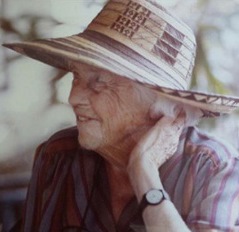
Ruth was married to Henry Shorland (‘Shor’) Gervis (1897-1968) who taught Natural Science at the School. Ruth’s appointment proved a great success and she soon raised the standard of art at the School. She believed that if a child could be taught to write then she saw no reason why it could not learn to draw. At that time the science laboratories were in the rooms immediately below the Art School and during the morning break she was the only woman amongst the group of science teachers enjoying tea or coffee brewed over a Bunsen burner.
In 1950, when King George VI and Queen Elizabeth visited the School it was intended that the Queen should make a brief visit to the Art School, however, when Her Majesty and Ruth got together the schedule was soon forgotten as they discussed their many shared interests. Ruth’s contract was extended beyond the end of the war and she remained at the School for twelve years, leaving in July 1953 to run the art department at the nearby Lord Digby’s School.
When Ruth Gervis left the School the following tribute was paid to her impact at the School:
‘It was a somewhat bold move on the part of Canon Wallace, as he was then, to appoint a lady as the sole art teacher in a big public boys’ school, but it can be doubted whether even his habitual optimism could have foreseen what a magnificently successful move he had made. From the moment that Mrs Gervis came, just twelve years ago, art in the School began to go forward. Her enthusiasm was infectious and all those who came under her influence seem to have caught something of it. A visit to one of the periodical exhibitions at the Art School would soon make it clear to anyone how versatile was the scope of her teaching and how she encouraged the natural ability – often unsuspected – that lies in so many boys to find its own way to the making of really original pictures. Spontaneity was the keynote of it all from the fresh and attractive, if slightly tentative, drawings of the lower school to the more finished and mature works of senior boys; but always it was evident that Mrs Gervis was there with advice and helpful criticism, developing her pupils’ own style and never trying to force them into any kind of mould. It was obvious too that even those without much talent did at least enjoy their work and begin to discover what fun it is to try to express oneself in form and colour. But making oil and water colour pictures was not all that was taught in the Art School. Many excellent models and statuettes were produced. The quality of the posters that adorned the Cloisters from time to time were a tribute to her teaching, and many School societies owed a debt to her help and advice. All this was not achieved without sacrifice. Mrs Gervis spent long hours at the School and gave up much of her own work as an illustrator. Besides this, the task of managing exhibition is an exacting one – far more so than many people realise. So those who knew her beat are perhaps not surprised that the time has come when she feels that she must have the respite which she well deserves. She can rest assured that for many she has made their time at Sherborne a happier and more satisfying episode. Now she is succeeded by one of her own old pupils, who need have no doubt that he is taking over very much of a going concern. To him we wish great success. But we are all sad at Mrs Gervis’s going, for the boys will miss a wise and gifted teacher and the staff a valued colleague. However, she will not be far away; so, while wishing her all happiness in her new part-time work at Lord Digby’s School, we can say “Thank you”, but we need not say “Goodbye”. After all she has left a hostage with us.’
(The Shirburnian, Summer 1953)

The next lady to arrive was Miss Margaret Gertrude Stuart Tidey (1891-1979) who came to teach modern languages for a term in October 1943, returning in January 1945 and remaining until July 1946. Margaret proved a useful additional member of staff, playing the violin in the School orchestra and taking part in the activities of the Polyglots society. In 1920, Margaret had been among the first women awarded degrees by the University of Oxford.
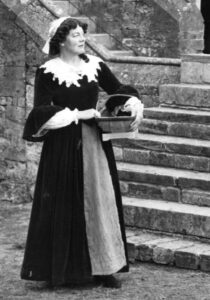
In 1944, two more women joined the teaching staff: Mrs Vera Andrews who was married to Arnold James Parkes (‘Kippy’) Andrews (1895-1973) a science master at the School, and Mrs Gray.
Mrs Vera Rowena Andrews (née German) (1902-1953), who taught at the School until 1946. was a keen actress and appeared in a number of School productions, including as Mrs Wilding in the 1950 School play ‘The Sherborne Story’.
Mrs Gray, the Headmaster reported, had just matriculated from Trinity College, Dublin in the same school as her son, ‘a somewhat unusual accomplishment’ he acknowledged. In March 1946, the Headmaster informed Mrs Gray that her contract was ending due to the imminent return of the permanent (male) teaching staff, but he thanked her ‘for all you have done to help us out during this difficult time’, adding that he would be more than happy to provide her with a testimonial.
Much to the Headmaster’s obvious relief all of the female members of the teaching staff he had appointed during the Second World War proved a great success. He reported to the School Governors ‘It is an interesting and significant fact that I have had not one single report or even whisper of disciplinary difficulties in the case of any of the four women teachers now engaged at the School, further confirmation, if one were needed, of my belief that good women teachers are infinitely preferable to second rate men.’
The impact of the albeit temporary introduction of women onto the teaching staff appears to have been a positive experience for the School, although after Ruth Gervis left in 1953 it was twenty years before another woman was made a permanent member of the teaching staff. Today, thankfully, the situation is very different.
Rachel Hassall
School Archivist
See also:
Sherborne and the fight for Women’s Suffrage
Obituary for Ruth Gervis
Strong Women of Sherborne
Matrons of the School Sanatorium
Evelina Haverfield’s recipe book
Former Headmasters and School Staff
For further information please contact the School Archivist
Return to the School Archives homepage