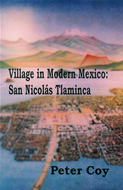
 Peter Coy visited Mexico several times between 1960 and 1985; twice as a student, undergraduate and postgraduate, and twice as a married lecturer on sabbatical leave. This study of a village was conducted over two periods of twelve and four months and was anthropological in purpose. In this book Coy treats the study of a modern Mexican village in a genealogical fashion, identifying the current inhabitants’ environment and their culture as that of a Spanish-speaking community of people, tracing their antecedents in the hope of disclosing why their beliefs and practices are as they are.
Chapters cover Cultural, Colloquial and Economic Environment (Pulque donkeys, Pulque rendezvous, Tylor’s aqueduct); An Agricultural Settlement (aerial photo of Tlaminca, Talaminca’s water distribution diagram, collective labour, collective school building); Land Tenure (village produce at the market, Maguey for domestic pulque); Beliefs and Practices (All Souls’ Day, Bread of the Day, Tree cross, Blessed Virgin Mary of the Assumption’s Day); Secular Ritual (A ‘Princess’ and her friends, Independence Day parade, A wall slogan); Spanish Mexico and after (Monument to Cortes, legal challenge to an hacidena, chapel mural at Chapingo); and The Chichimecs and Codex Xolotl (Folio 1 of the Codex, Chichimec heartland, The Cano Quebrado).
The village of San Nicolás Tlaminca lies on the eastern side of the highland Valley of Mexico and within the municipality of Texcoco de Mora. The town of Texcoco itself replaced Acolhuacan, the capital settlement of the Chichimecs, which was an adjacent rival to the capital of the Aztecs, Tenochitilán.
Peter Coy, Village in Modern Mexico: San Nicolás Tlaminca
Publisher: Lulu.com (2009)
ISBN-13: 978-1-4092-7404-9