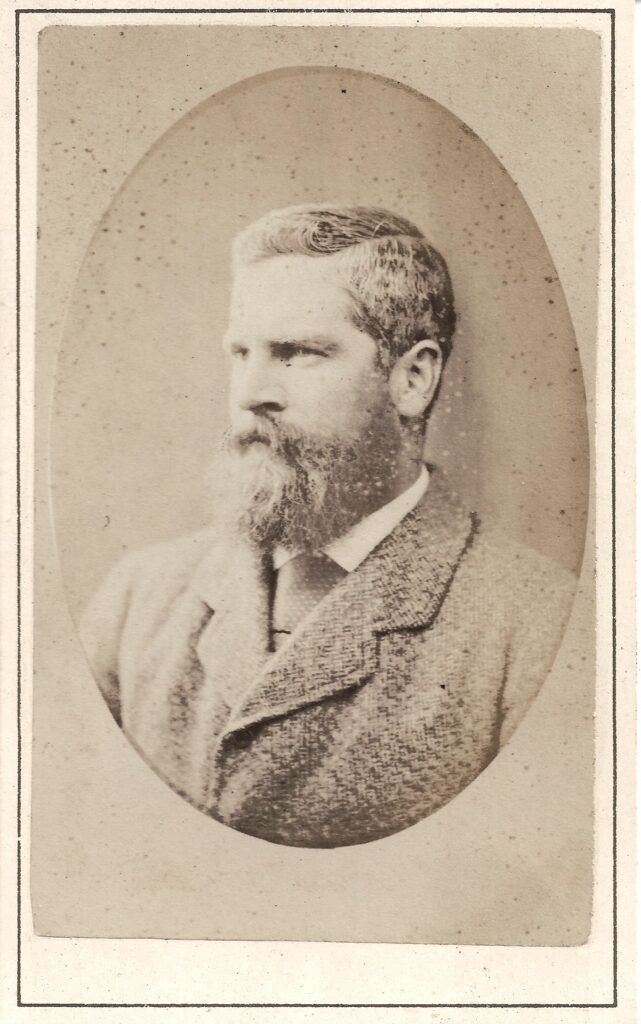
Littleton Albert Powys (1840-1879) was born on 27 July 1840 at West Bromwich, Staffordshire, the eldest son of the Rev. Littleton Charles Powys (1789-1872) and Amelia Powys (née Moilliot), the widow of Samuel Knight. Littleton Albert’s father was for thirty years rector of Stalbridge in Dorset, a living of Corpus Christi College, Cambridge, and this was where Littleton Albert’s younger brother Charles Francis Powys (1843-1923) was born in 1843.
From 1855 to 1857 Littleton Albert attended Sherborne School, where he was a member of School House (run by Headmaster Hugo Daniel Harper) and became a proficient boxer. His nephew Llewelyn Powys in his short story ‘Stalbridge Rectory’ (Dorset Essays, 1935) retells a story about how his uncle, when a boy, had challenged ‘the worst poacher in Stalbridge’ to a boxing match behind the Rectory garden, and how the men were astonished at the number of rounds and the amount of punishment he sustained before he was knocked out! Llewelyn also quotes from a letter written by Headmaster H.D. Harper to the Rev. L.C. Powys about Littleton Albert’s decision to join the army:
King’s School, Sherborne, May 10th.
My dear Sir, I am always at home of sheer necessity, and it is part and parcel of my daily work to talk over such matters as those now concerning your boy. I am very sorry that he has chosen the army. I am always sorry for every boy who does so, not only because it is no profession in reality but also because of the temptations into which he is so thrust. However in many points your lad is fit for a soldier and will be a straightforward brave fellow under any circumstances…
I am, dear Sir, Yours Sincerely,
H.D. Harper.
Littleton Albert remained throughout his life a proud Shirburnian, subscribing to both the Old Shirburnian Society Scholarship Fund and the School Cricket Pavilion Fund, as well as playing for the Old Shirburnian cricket team.
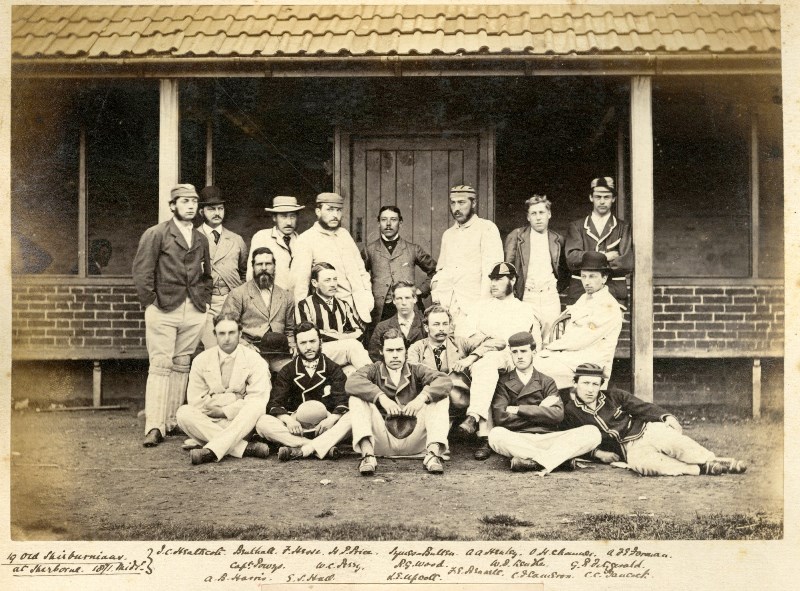
Despite his Headmaster’s misgivings, Littleton Albert entered the army on 29 October 1858, as ensign, by purchase, in the 83rd (County of Dublin) Regiment of Foot, and purchased his lieutenancy on 21 December 1860, and his captaincy on 20 February 1866.
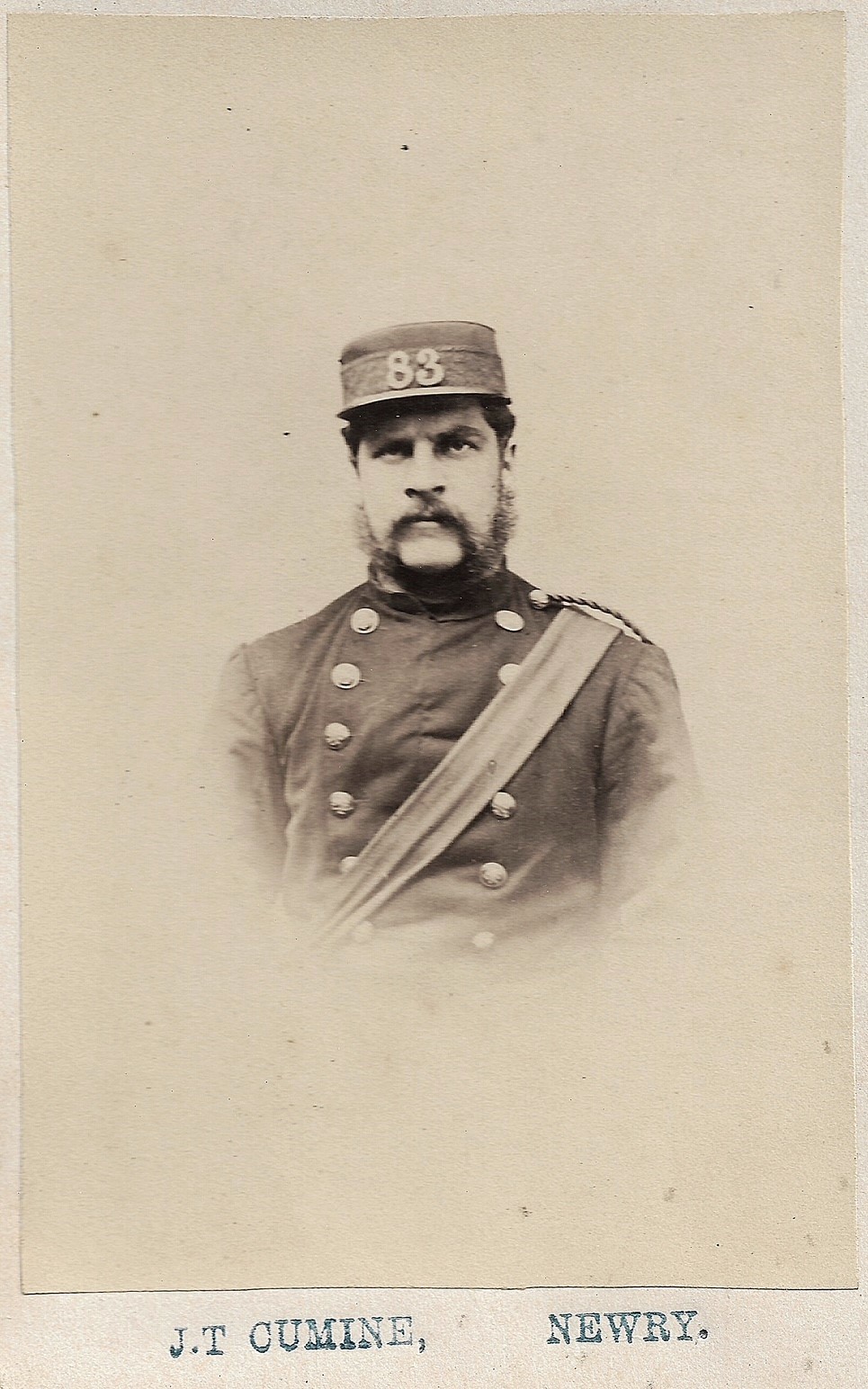
Shortly after obtaining his captaincy he exchanged into the 59th (2nd Nottinghamshire) Regiment of Foot and in 1867 accompanied his regiment to Ceylon, serving at Kandahar during the 2nd Afghan War (1878 to 1880). He was promoted to Major on 30 December 1878.
His nephew, John Cowper Powys, recalled Littleton Albert visiting the Powys family when they lived at Shirley in Derbyshire, where he impressed John as ‘a dignified, bearded man, with a square forehead… I recollect well the vicious pleasure I got when seated on his knee in the evening, he permitted me to pound his bearded face with my fists to test the courage of this officer of the Queen.’
When Littleton returned to his regiment at Kandahar he kept up a regular correspondence with his brother Charles. These letters and other material relating to Littleton Albert Powys and the Powys family can be found in the John Cowper Powys Manuscripts and Papers (ref. JOCOWPOW) held at the National Library of Wales.
Littleton Albert Powys died from cholera at Kandahar on 6 August 1879 and was buried the same day in Kandahar cemetery by Idgah Gate.
The following notice appeared under ‘Military Notes’ in the Times of India on 16 August 1879:
‘The recent telegram from Kandahar, announcing the death from cholera of Major Powys, H.M. 59th Foot, will have been read with great sorrow by his many friends in this Presidency, where he served for some years. He was an indefatigable and daring sportsman, a most gallant soldier, and a man whose kindly and generous nature endeared him to everyone who knew him. What a terrible part disease has played in this Afghan business.’
He is also commemorated by a memorial plaque at the Church of St Mary the Virgin, Stalbridge, Dorset.
By his will made on 15 June 1875, Littleton Albert Powys left £5,000 to his step-sister Philippa Shirley (née Knight), the widow of the Rev. Walter Shirley (1828-1866) Dean of Christ Church, Oxford. He also left £500 in trust ‘to apply for some purpose of a lasting nature for the benefit of the non-commissioned officers & men of my Regiment (the 59th) as the three senior officers of that Regiment may suggest’. To his brother the Rev. Charles Francis Powys (1843-1923) he left all his real estate and remaining personal estate, and to solicitor Thomas Lyon (1813-1878) of the firm Newman and Lyon of Yeovil and 1 Clements Inn, London, he left all his trust & mortgaged estates. Thomas Lyon was a pupil at Sherborne School in the 1820s under his uncle the Rev. Ralph Lyon (1795-1856) who was Headmaster of Sherborne School from 1823 to 1845.
- The Powys Family and Sherborne School
- The Powys Society
- Littleton Albert Powys papers (ref. JOCOWPOW ADDs), National Library of Wales
- Amelia Powys papers: letters from Littleton Albert Powys (ref. JOCOWPOW ADD5/2), National Library of Wales
- Charles Francis Powys papers (ref. JOCOWPOW AD), National Library of Wales
- John Cowper Powys Manuscripts and Papers (ref. JOCOWPOW), National Library of Wales