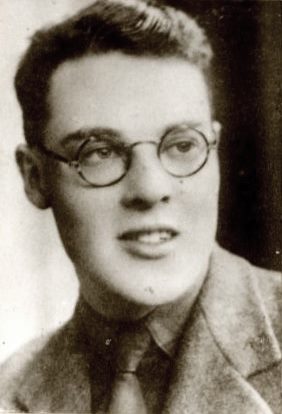
The inscription on a headstone in the Arezzo War Cemetery in Tuscany reads – ‘A Christian Gentleman, Artist, Poet and Soldier. He lives for Ever More’. This headstone marks the final resting place of Lieutenant Bob Thomas of the Grenadier Guards, who died on active service on 3 August 1944, aged 22.
While serving in Italy in 1944, Bob Thomas wrote of his feelings of love and longing for Sherborne and the surrounding countryside, just as almost one hundred years before Robert Browning had written in Italy his famous poem ‘Home Thoughts, from Abroad’.
Robert Dalzell Dillon Thomas (1922-1944), known as Bob, was born on 30 May 1922 at North Syde (now Bute House) in Long Street, Sherborne. Bob’s father, Meredith Dillon Thomas (1894-1979), who was awarded the Military Cross while serving with the Grenadier Guards during the First World War, moved with his new bride Rachel (née Dalzell Piper) (1895-1980) to Sherborne in September 1921 on being appointed to a teaching post at Sherborne School, and it was here that their two sons, Bob and Geoffrey, were born in 1922 and 1924 respectively. Living initially in Long Street, in the 1930s the family moved to The End House (now the Shielings) in The Avenue, and later to the Manor House in Newland, which they sold in 1948 to Sherborne Urban District Council for £7,500. Their final home was Garden Close in Long Street, which they built in 1954.
Meredith and Rachel soon became involved in all aspects of town life. Meredith joined the newly formed Sherborne branch of the British Legion and the Rotary Club, and served as a governor of Foster’s School and Sherborne Almshouse. Both Meredith and Rachel were active members of Sherborne Golf Club, serving as captains and match secretaries, and were also keen supporters of Sherborne Art Club exhibitions, as well as many local charities.
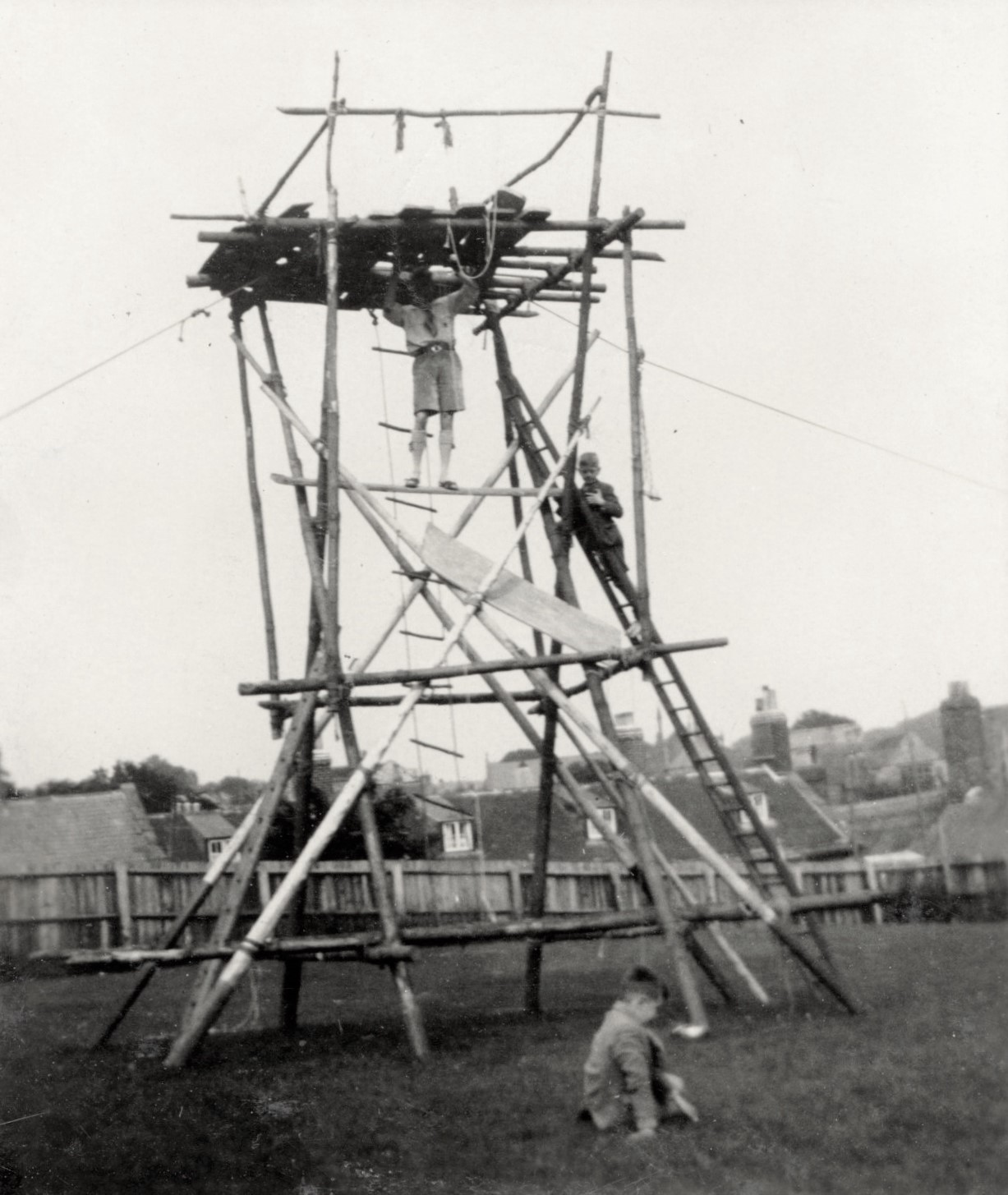
In 1931, aged 9, Bob went to Sherborne Prep School where he joined the Stag Patrol, 4th Sherborne Scouts, becoming in 1935 Patrol Leader of the Woodpeckers. Throughout his short life Bob remained an enthusiastic member of the Scout movement and in summer 1943 spent part of his leave with his old troop at their camp at Chilton Cantelo.
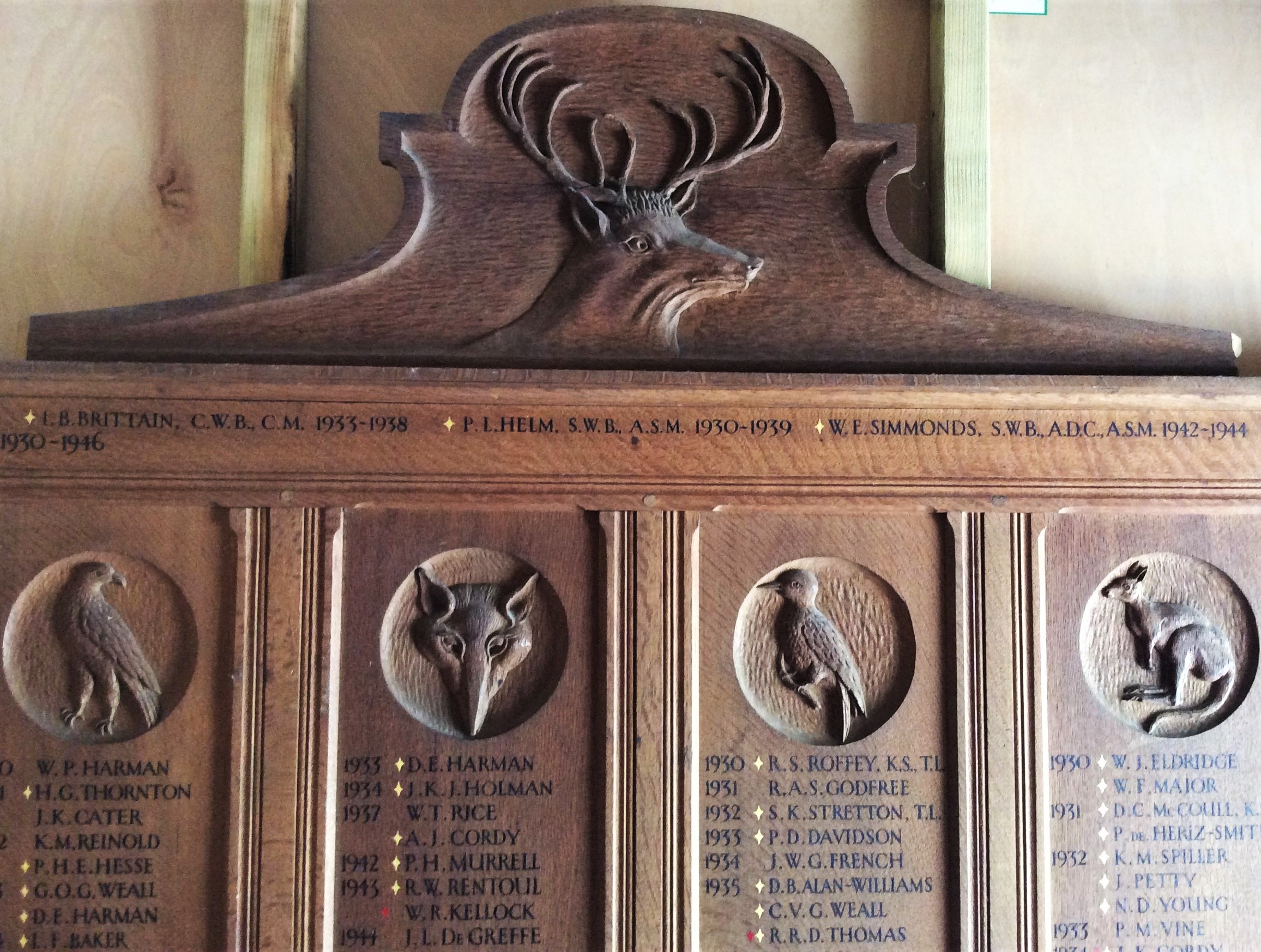
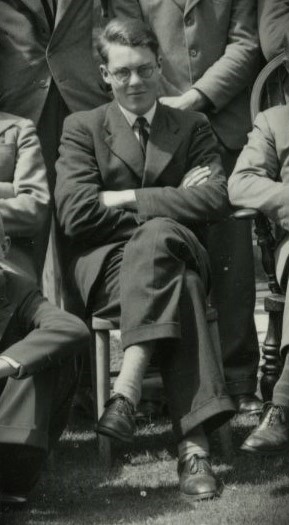
In September 1936, Bob won a Classical Exhibition at Sherborne School and entered Abbey House, then run by Mr Parry-Jones. Like his father who was awarded an Oxford Blue for athletics, Bob was ‘a runner with a fine determination and beautiful style’ and a keen athlete. Academically, Bob also did well, joining the 6th form history set and winning the School Latin Prose prize in 1940. From 1940-41 he co-edited the School magazine, The Shirburnian, which saw his poem ‘Rede to a Rabbit’ published in the March 1941 issue. He was also a House Prefect, a Sergeant in the OTC, and a member of a number of School societies (Duffers, Eclectics, Interpretes and Les Fauves). Perhaps, more importantly, Bob was known at School for being amongst ‘the most gentle, humble, good without being self-righteous, and loyal without asking for any recognition or return… able to see the best in others and pass over without unpleasantness what was less good.’ (The Shirburnian, December 1944)
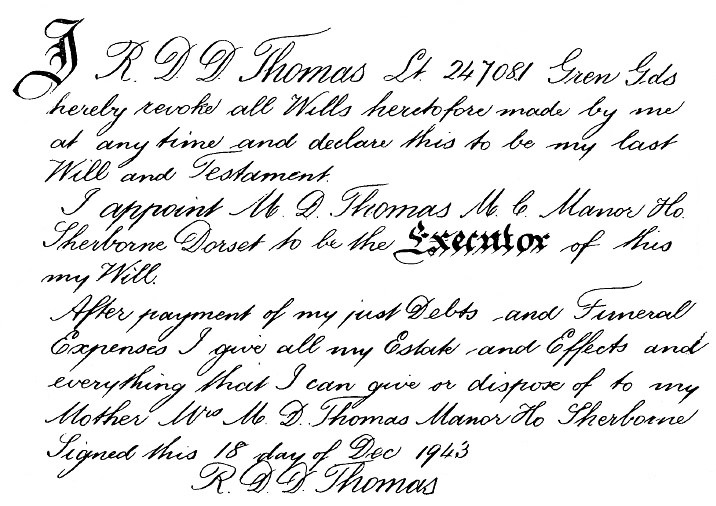
On leaving Sherborne in 1941, Bob went to Hertford College, Oxford to read Classics, with the intention of eventually taking holy orders. However, his plans for the future were interrupted by the Second World War and in 1942 he left Oxford and enlisted. Having passed through Sandhurst he was gazetted 2nd Lieutenant in the Grenadier Guards and was posted to Catterick Camp where he took up signalling and became so proficient that he was made an instructor. On 5 November 1943 Bob went to Italy with the 3rd Grenadiers where he took part in the Anzio landings, and on 18 December 1943 he made his last will and testament, appointing his father as his executor and leaving to his mother his estate and effects ‘and everything that I can give or dispose of”.
By August 1944, the Italian Campaign saw the Allied forces advancing quickly into Northern Italy as the Germans retreated back to the Gothic Line which ran between Pisa and Rimini. The 3rd Grenadiers were advancing three-quarters of a mile every night and on 3 August 1944 Bob, who had taken over the command of no.11 Platoon of no.4 Company, was leading the advance. That night, in order that the rest of the Company could come up before dawn, Bob’s platoon needed to occupy a castle on top of a hill near the River Arno at Florence. The only way into the castle was through an archway and, not knowing whether the castle was occupied, Bob told his platoon to wait outside while he took three men forward to find out. But, as they entered the archway they came upon two or three German soldiers who were making their escape and Bob was shot through the heart, dying instantly. It appears that the German soldiers had been setting booby traps in the castle one of which later caused Bob’s commanding officer Peter Giffard to lose a foot.
When news reached Sherborne of Bob’s death, his father at once ran up the Union Jack on their home at the Manor House in Newland and then he and Rachel cycled to some of Bob’s favourite places. A memorial service was held for Bob in Sherborne Abbey on 25 October 1944 when the first hymn was ‘I vow to thee, my country.’
The Note-book of a Lieutenant in the Italian Campaign
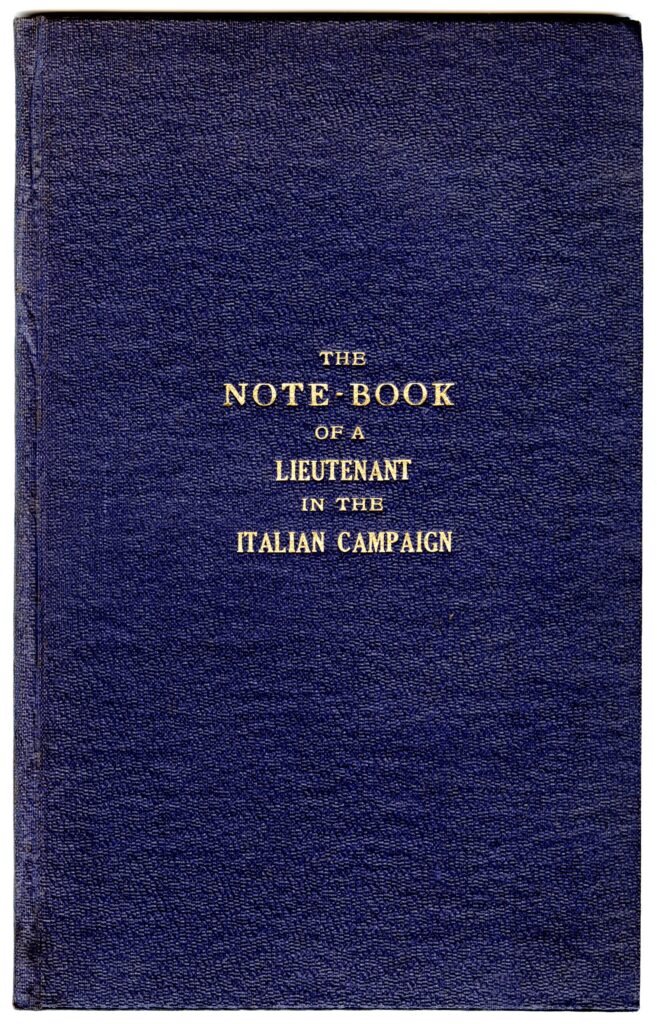
In 1946, Meredith and Rachel Thomas privately published under the title The Note-book of a Lieutenant in the Italian Campaign, a collection of poems, short stories and letters that Bob had sent to them from Italy between February and July 1944.
The collection reveals Bob’s strong love for Sherborne. In the letters he describes how after days travelling along bumpy roads in the back of a lorry or during breaks from fighting he would comfort himself by taking imaginary walks around Sherborne and the surrounding countryside:
‘I love to wander about Sherborne in and out of the house, over the School buildings, sit in the library, go scouting at the Prep, and how often I walk with you round Priestlands or in Pinford Lane or walk down the Avenue looking over the walls of all the gardens. Lovely cool cloudy west wind days on the golf links or thin sea-misty rain on Knighton Hill.’
And in another letter he describes a walk he had pictured the night before – ‘up the Laundry field and down Blackberry Lane, but instead of returning via Priestlands I went up the lane to Highmore Road on to the Marston Road, down Sheeplands and Factory Lane (across the Yeovil Road where we say “We’re off”), past the Prep and the Headmaster’s garden, through the Swan and home.’
The river Yeo, which flows along the southern edge of the town, was obviously another of Bob’s favourite places. In the collection is a short essay he wrote about the river in which he defends it against those who say it is just an insignificant muddy stream and does not compare with the Thames, the Severn, the Danube or the Volga, but ‘to many like myself, born and bred in Sherborne it is a river – and always will be a river – and even if fate brings me to the Amazon or the Ob my views will not change.’ In the essay Bob describes the course of the Yeo as it flows from Sherborne Lake through Purlieu Meadow, where on Sundays ‘schoolboys float their straw hats downstream and roll their best trousers up to paddle’ and ‘In the evenings lovers walk through arm in arm, schoolmasters and shopkeepers use it as a cloister, and children vainly hunt for minnows in a jar.’ Then he follows the river’s course alongside the railway line to Westbury Mill and on to Thornford and Chilton Cantelo.
In March 1944, while at Piano di Sorrento, Bob wrote the following poem about the river Yeo:
The Yeo
Flow on sweet brook, nor heed that I
Thy banks no longer roam,
Flow on nor pause to wonder why
I’ve stayed so long from home.
I was not born to wander far
Nor wished to cross the sea,
I know there mightier rivers are
But none so dear to me.
When cowslips dance on Knighton Hill
And spring is in the air,
Thy waters glide by Westbury Mill
And leap down Thornford weir.
The sleepy herds of cattle drink
Or gently chew the cud
And slowly as they stand there sink
Deep in the oozing mud.
Beyond the marsh where willows rise
And kingcups grow and sedge
Country kids with cheerful cries
Play by the water’s edge,
And boys between the hours of school
Forgetting verse and prose
Rejoice to feel the waters cool
And the mud between their toes.
Oft times I’ve walked at close of day
That path beside the stream,
I do it still, though far away,
In many a homesick dream
And watch the golden sun go down
And the glow die in the west:
Then the lights come on in Sherborne town
And call me home to rest.
Bob also liked to picture his family home at the Manor House in Newland, writing to his parents ‘It makes me happy when I think of the lovely flowers you keep for me in my room. I can picture now the hot July sun streaming on them from half drawn curtains and the lovely smell that scents the house in the late afternoon. I suppose there are a few Mrs Sinkins and lots of lavender. Red roses (Paul Scarlets) by the tennis court and the kitchen garden door, and apples beginning to turn on the early tree.’

In the same letter, written in July 1944, Bob describes writing the following poem about Dorset while sitting at the foot of Monte Lignano near Arezzo, and thinking about where all the plants grew – the foxgloves on the slopes near the golf links, the mushrooms on the Poyntington Downs, chestnuts at Milborne Port, meadow sweet and willow herb along the Oborne stream, primroses along the Beer Hackett road, and celandines near the New Road wood:
Dorset, Dear Dorset.
The spring has come to Dorset,
The larches don their green.
And brightly shines the undergrowth
With starry celandine.
The hedges flaunt new-budded leaves
And withies tipped with red
No longer does the primrose fear
To rise from grassy bed.
Chorus:
There is no land so dear to me
Come sunshine wind or rain;
And that is where I mean to be
If I come home again.
Dorset, dear Dorset,
I’ve left my heart in Dorset,
And I’ll live and die in Dorset
When I come home again.
It’s Summer time in Dorset,
The woods are white with may,
Tall foxgloves guard the upland slopes
And buttercups gleam in the hay,
Dog-roses blush down every lane
And the wild thyme scents the hill,
And willow herb and meadow sweet
Dance by the wayside rills.
Chorus: There is no land…
‘Tis Autumn now in Dorset
A glory of russet and gold,
Softly the leaves come drifting down
As the nights grow crisp and cold.
There are chestnuts strewn on the woodland paths
Fresh from their prickly shells,
And mushrooms spawn on the windswept down
And the berries are ripe in the dells.
Chorus: There is no land…
‘Tis wintertime in Dorset,
The fields are bleak and bare
And the cold sun sinks in a crimson haze
For there’s frost in the evening air.
The milk is frozen in the pail
And there’s ice in the ruts on the path,
And every yard is stacked with logs
For piling on the hearth.
Chorus: There is no land…
During his time in Italy, Bob also looked back fondly to his days at Sherborne Prep School, and in particular to his time with the Stag Patrol, 4th Sherborne Scouts, which was then run by the Second Master Edward Thompson (1900-1969). In his short story ‘Last Night of the Summer Term’ Bob describes Mr Thompson, who he renames Mr Wentworth, wrestling with the end of term reports and exam papers, surrounded in his chaotic study in Netherton House with equipment for the summer Scout camp, while upstairs the boys sleep soundly in the dormitories unaware of their housemaster’s late night. Bob describes how the Mr Wentworth takes a brief stroll round the Prep School grounds, stepping out of the French doors and walking down to the cricket field, where ‘despite the gathering gloom he could see the worn white patches in the middle which clearly branded the season as over. Only three months ago that centre had looked like a billiard table. He was secretly rather sad when the summer term came to an end and was glad that the summer camp made the end more gradual.’
In the collection is a poem Bob wrote In May 1944 at Rotondi, in which he describes the happy times he spent at Scout camps at Chilton Cantelo:
CHILTON CANTELO
How long it seems: yet t’was but yesterday
That we went camping through those sunlit hours;
And those fair fields so bright with summer flowers
Were filled with happiness and laughter gay,
How green those meadows were beside the Yeo
Where we would go to bathe in water cool,
And dive into that wide mysterious pool
From shaded banks where drooping willows grow.
How deep and dark the woods when twilight sent
Us clustering round the camp fire’s cheerful blaze,
How bright the stars above the river haze,
How fragrant was the wood smoke’s lingering scent.
T’was there we learn’t to love the open sky
And share with Nature many a hidden joy.
There friendships grew which time cannot destroy
But rather strengthen as the years go by –
And now on lonely trails each Stag must go
With naught but memories to light his way
Until he finds again, some happier day,
That camping ground at Chilton Cantelo.
On 31 July 1944, Bob wrote for what would be the last time to his parents. His thoughts turned to the end of term at Sherborne School where he knew his father would be attending Lists in the Big School Room and he pictured the Headmaster saying to the teaching staff as they made their way to their seats on the stage, “What a good year it has been, considering.” Enclosed with this last letter was the following poem Bob had written in a vineyard in the Arno Valley about Sherborne’s annual Pack Monday Fair, which is traditionally held on the first Monday after Michaelmas Day (11 October):
PACK MONDAY FAIR
Come Hallowmas when trees are bare
With one accord the folks repair
To see the sights of Pack Monday fair
Over to Sherborne town.
Hawkers, hucksters, gypsies, quacks
Bowed by the weight of their bulging packs
Riding nags and bony hacks
Flock to the town for the fair.
There be plenty of money about today
For them as know the tricks to play
And crooked or straight they’ll find a way
Their purses to fill at the fair.
There are gas lit stalls in the narrow streets
Where a penny can buy the rarest treats –
Candy and nougat and sickly sweets
To tempt the kids at the fair.
There are merry-go-rounds with their dazzling light
And music playing half the night
And brawling for them as wants a fight
And plenty of drink in the pubs.
Here’s the horse-thief’s fortune’s made
Here pedlars of every grade
Ply a brisk and roaring trade
Selling their wares at the fair.
Three nights and days the gypsies stay
Then they quietly fade away
Whither going, who can say?
And silence comes to the town.
After the war, Bob had planned to take holy orders and to return to Sherborne to serve the town he loved. In one of his last letters to his parents he wrote, ‘I can’t somehow picture myself living far away from it all. I want to help make Sherborne a perfect post-war town. I do so want to make people appreciate lovely things – to know what lovely things are.’
Although Bob never did come home, in 1951 his father wrote to a former pupil saying he took comfort from the important contribution that The Note-book of a Lieutenant in the Italian Campaign had made, saying, ‘Bob was a man who might have done much both as a writer & as an artist & as a parson, which is what he intended to be, but it may be that through this simple little book he is doing just the job that God wanted him to do in the world – and that may be the explanation of why it was necessary for him to leave it.’

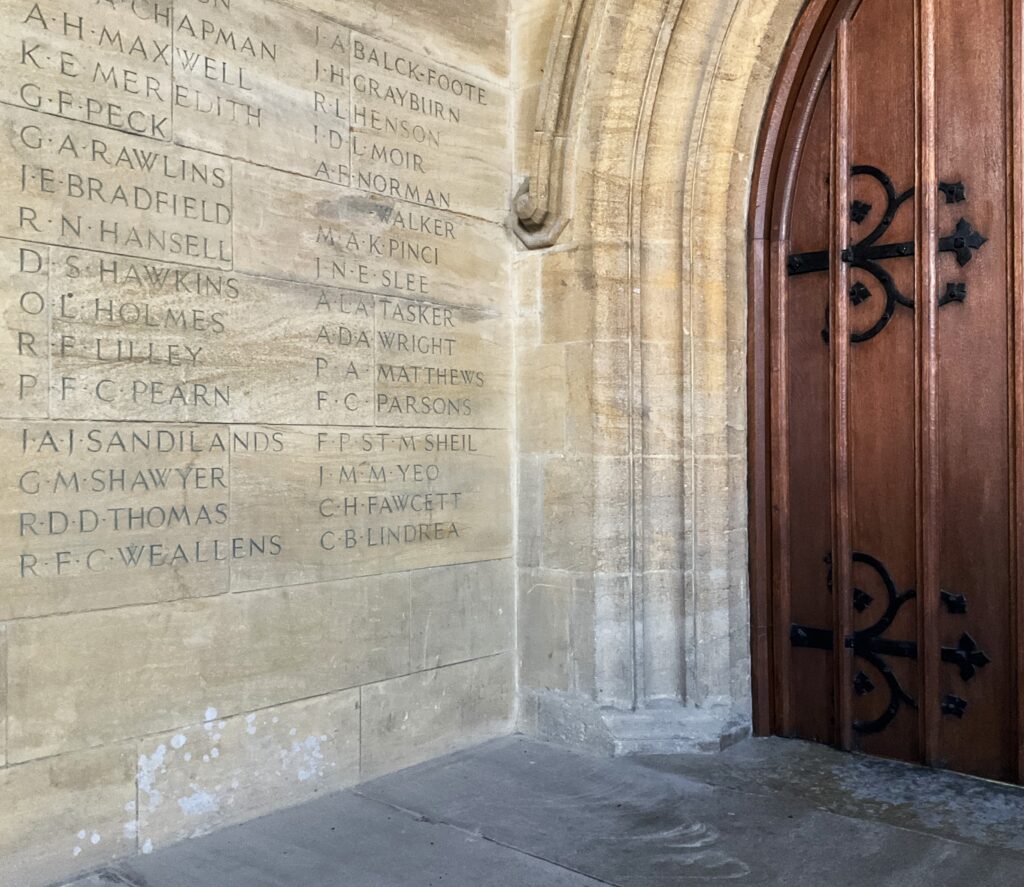
Today, Bob’s name is remembered on the Sherborne town war memorial in Half Moon Street, on Sherborne Prep School’s roll of honour and on Sherborne School’s war memorial staircase. He is also remembered on the grave of his parents and younger brother in St Cuthbert’s churchyard, Oborne.
Rachel Hassall
School Archivist
Read R.D.D. Thomas’s The Note-book of a Lieutenant in the Italian Campaign (privately published, 1946)
See also:
- R.D.D. Thomas’s entry in Sherborne School’s Book of Remembrance
- Online resources for Sherborne School and the Second World War
- Sherborne School Roll of Honour
- John Durnford (1920-1995): OS WW2 Poet
- Books written by or about Old Shirburnians & members of School Staff held in the Historic Library & Rare Book Collection at Sherborne School
For further information about the Sherborne School Archives please contact the School Archivist
Return to the School Archives homepage