
‘Marley was dead: to begin with. There is no doubt whatever about that.’ So, began Charles Dickens’s reading at the Sherborne Literary and Scientific Institute on Thursday, 21 December 1854.
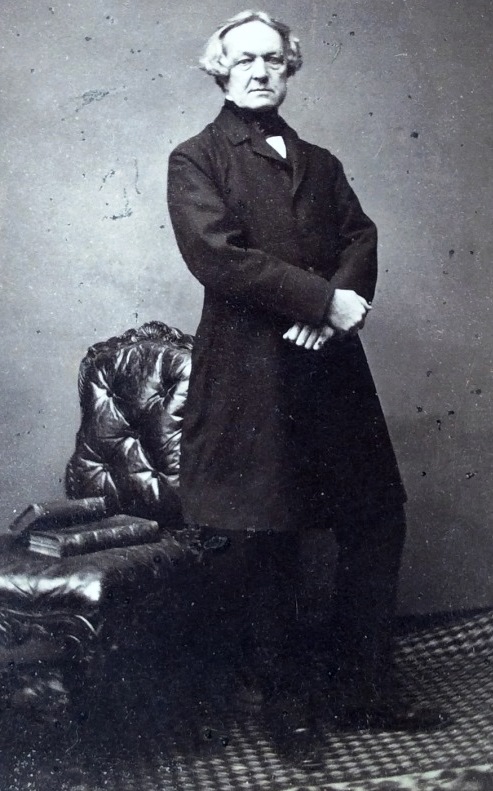
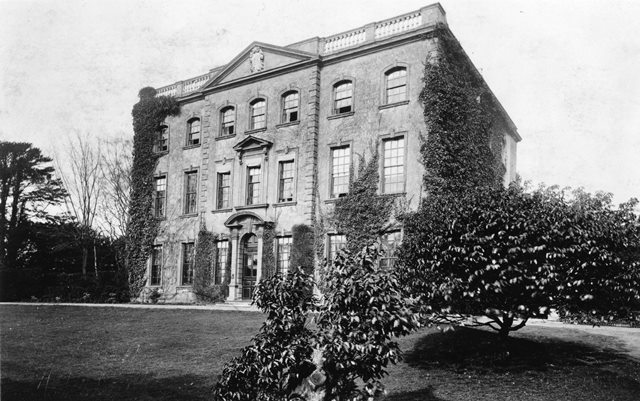
The novelist Charles Dickens (1812-1870) was a close friend of William Charles Macready (1793-1873), the Shakespearean actor-manager who retired to Sherborne with his family in 1850, renting Sherborne House in Newland from Lord Digby of Sherborne Castle. Dickens is known to have visited the Macready family at Sherborne House on at least three occasions, in June 1851, October 1853, and December 1854.
Although Macready had been worried when he left London for Sherborne that he would miss the ‘varied, brilliant, and powerful minds’ of his friends in this sleepy backwater, he need not have worried for in September 1851 he was invited to become President of the Sherborne Literary and Scientific Institution, and feeling ‘that it was my duty to do my best in such a cause. I assented.’
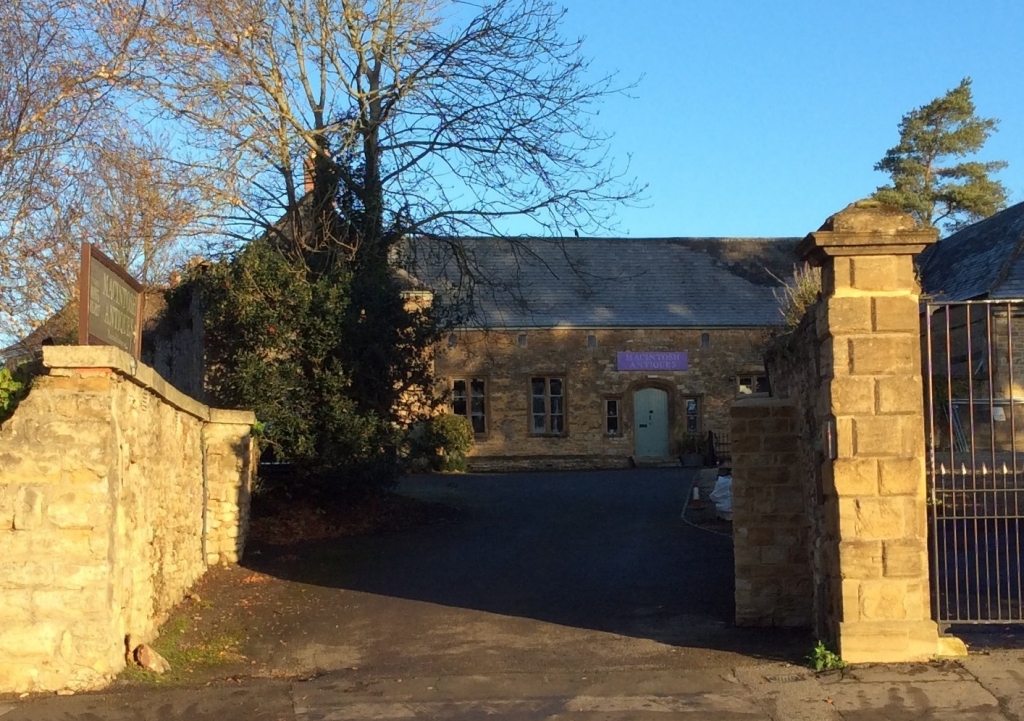
Founded in 1846 as a Mutual Improvement Society, the Sherborne Literary and Scientific Institute went from strength to strength under their new President, and on 26th June 1854 they moved from their rooms in Cheap Street to larger premises in the former stable block adjoining Sherborne House in Newland (now The Sherborne). The new premises not only allowed the Institute to offer a wider range of evening classes for the working classes, including music, drawing and French, but also provided space for a library and to hold lectures. Macready not only taught many of the evening classes at the Institute, but also gave public readings and lectures to raise funds for the Institute and invited his well-known friends to do the same, including William Thackeray and Charles Dickens.
By 1854, Charles Dickens was famous not only as an author, having already published The Pickwick Papers, Oliver Twist, Nicholas Nickleby, The Old Curiosity Shop, Barnaby Rudge, Martin Chuzzlewit, Dombey and Son, David Copperfield, Bleak House, Hard Times and A Christmas Carol, but also for the public readings he gave of his own works, which were considered the great theatrical sensation of the day.
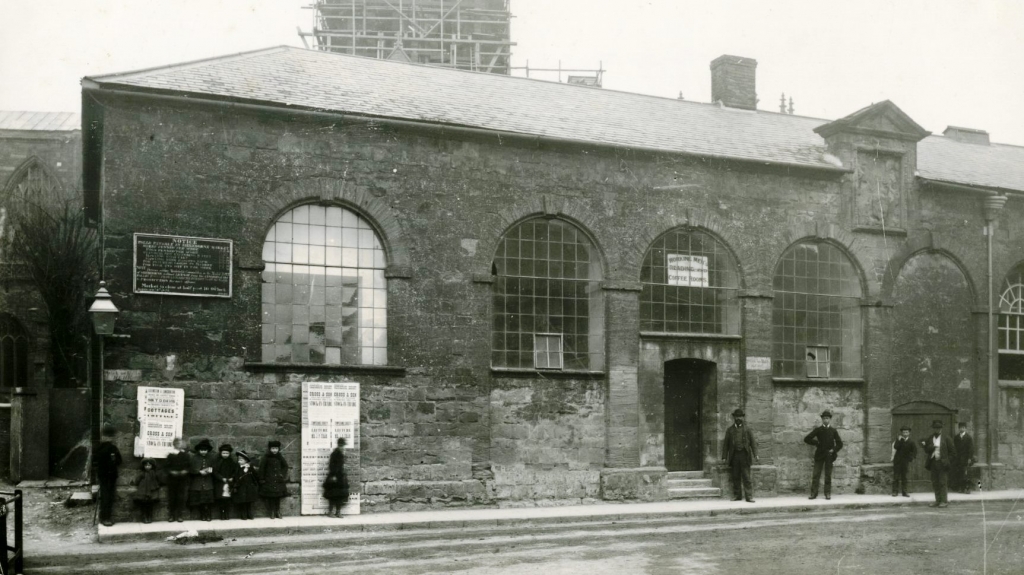
Preparations for Charles Dickens’s reading at Sherborne began at a committee meeting held at the Institute on the 16th November 1854. Similar readings given elsewhere by Dickens had raised large amounts for charity (£300 was raised in Birmingham), and so it was proposed that the reading should be used to raise funds for the Institute’s Library Fund. An entrance fee of 5 shillings (about £15.00 today) was agreed and, as it was assumed that Dickens would attract a large crowd, it was proposed to hold the reading in the Town Hall (then situated in Half Moon Street opposite the Digby Road and demolished in 1884). Due to Macready being too unwell to attend the meeting, the committee adjourned to Sherborne House where Macready agreed the ticket price and the proposal to send out advertisements for the reading to booksellers in Yeovil, Wincanton, Crewkerne, Dorchester and Bruton.
However, at the next committee meeting on 28th November 1854 it was noted that ‘Mr Macready be informed of the feeling of dissatisfaction which had been expressed by persons in the town at the price of admission to Mr Dickens’s Reading’.
By the 15th December, just six days before Dickens was due to give his reading, ticket sales were still low and it was decided to move the event to a smaller venue at the Institute’s lecture room in Newland. The change of venue evidently ‘originated in the sensitive desire to compliment Mr Dickens with a full house’.
Macready was outraged and felt that Sherborne had snubbed Dickens, writing to the local newspaper – ‘The tickets of non-members had been priced at five shillings, certainly no unreasonable amount when the man and his object were jointly or even severally considered. A crown, what is it? The cost of a bottle of bad wine swallowed at a public dinner, the price of a local ball ticket, a sum so often squandered and frittered away when we cannot tell where the money goes to. But for a definite and intellectual and laudable object, five shillings was found to be a very large sum of money indeed, and it soon became evident that to avoid ‘the beggarly account of empty boxes’ that would have insulted Mr Dickens and disgraced the locality, fresh arrangement must be made.’
Another reason put forward for the low ticket sales was that Thursday 21st December was the last market day before Christmas and therefore 2pm was not a convenient time. Macready concluded his rant saying, ‘A bumper audience would undoubtedly have greeted Mr Dickens if the time and the cost had suited the class which furnish his most ardent admirers. Sherborne, Yeovil, and Milborne alone, without a single adjoining parish, could and would have filled our Town Hall had the reading been at night and the tickets at two shillings’.
And so, at 2pm on Thursday, 21st December 1854, Charles Dickens took to the stage at the Institute in Newland to give a reading of ‘Marley’s Ghost’ taken from the first chapter of A Christmas Carol. He probably began the reading, as he had done a few days earlier at Reading, by asking his audience ‘to regard themselves, for the time being, as a small snug party assembled round the Christmas fireside, giving utterance to their emotions without restraint, and in their own accustomed way, without the slightest fear of disturbing him.’
Despite the room being very crowded and the reading lasting three hours, we are told that Dickens read in a quiet, unaffected tone and that the interest of the audience was sustained to the last. Amongst the audience were Robert Gordon of Leweston House, John Goodden of Compton House, the Rev. Edward Nares Henning of Newland House (a friend of Macready and of the Dorset poet William Barnes), the Rev. William Hector Lyon (Rector of Oborne and later Vicar of Sherborne), the Rev. Charles Robert Dampier (Vicar of Thornford), the Rev. George Southwell (Vicar of Yetminster), the Rev. John Blennerhassett (Vicar of Ryme Intrinsica), the Rev. Richard Messiter (Vicar of Stourton Caundle), the Misses Chadwick and Mrs Cookson. After the reading, Sir William Medlycott of Ven House proposed a vote of thanks to Dickens, which was seconded by Macready.
Charles Morgan (1836-1911), who lived at Greystones in Newland, and like Macready had moved to Sherborne for the education of his sons, also attended the reading, writing afterwards in his diary: ‘room at the Institution crammed and suffocating. 2 till 5… Mr Charles Dickens is rather small and slender, quite self-possessed, animated with a keen eye. Dark hair and enough of it with moustache. A good clear voice tho’ quick. He seldom made a slight mistake. The Reading 2 ½ hours or more, personifying by voice 3rd parties of various denominations. Greatly applauded.’
The reading raised £22 for the Institute’s Library Fund (about £1,300 today). The committee were careful to get the most for their money and amongst the books purchased (at trade prices) was a ‘cheap edition’ of the works of Charles Dickens! They also purchased copies of Sir Walter Scott’s Waverley Novels, Lord Byron’s poems, Thomas Gray’s poems, Thomas Hood’s poetical works, Tennyson’s poems, Heber’s and Heman’s poetical work, Thomas Moore’s works, Thompson’s works, Macaulay’s History of England, Thomas Carlyle’s Critical and Miscellaneous Essays, Campbell’s Lives of the Lord Chancellors, Humboldt’s Cosmos, Bloxam’s Principles of Gothic Ecclesiastical Architecture, Wilson’s Treatise on Chemistry, Prescott’s History of the Conquest of Mexico, and Herschel’s Outlines of Astronomy. These books were shelved in a separate bookcase in the Institute’s library with an inscription stating that they had been purchased with the money raised from Charles Dickens’s reading.
At the Institute’s AGM held on 25th June 1855, the Secretary reported that ten public lectures had been delivered that year, seven gratuitously and three by paid lecturers, and that Macready had also given a private reading from the English poets. Thanks to the £22 worth of books purchased with the money raised by Charles Dickens’s reading, and generous donations of books and money from John Penny (520 volumes), Robert Gordon of Leweston House (£10), Mr Pocklington (£2), William Frederick Pollock (books), the Rev. James White (books), the library now contained 1150 volumes.
William Charles Macready and his wife Catherine had arrived at Sherborne in 1850 with eight children. By the end of June 1858, Macready’s wife and three of their children, including Henry Frederic Bulwer Macready (1838-1857) who was Charles Dickens’s godson, had all died. Sherborne House now held too many memories for Macready, who said it had become ‘mournful to look on the many empty seats around the once crowded table, and life had lost much of its charm in the absence of those whose presence made its happiness.’ By 1860, Macready decided to leave Sherborne and start anew in Cheltenham.
On 27th March 1860, Macready gave his last reading for the benefit of the Institute (‘a reading from the masterpieces of Shakespeare’) and donated to it a large collection of fossils and minerals and a working model of a steam engine. The committee presented Macready with a silver-plate epergne (costing £30) and agreed that a photographic likeness of Macready should be hung in the Institute’s Reading Room.
At the Institute’s AGM held on 9th July 1860, the committee recorded their thanks to Macready for all he had done for them during his nine years as President:
‘In reporting on the operations of the Society during the past years and on its present state your committee wish prominently to notice the loss which the Institution has sustained in the removal of Mr Macready from the Town. During the last nine years he has taken a pleasure in working with your successive committees and by his continued active exertion and thoughtful consideration, by the aid of his own time & purse and with the co-operation of his many Friends who have resided in the neighbourhood and those who have come from a distance, he has greatly contributed to place the Institution, the Classes belonging to it, and its Library in the position they have now attained and even after he had resigned his connection with the Institution on the 30th March, you had the pleasure of thanking him for the present of a large and valuable collection of minerals and fossils which it is hoped is the nucleus of our extensive Museum.’
And so Macready’s association with Sherborne’s Literary and Scientific Institute came to an end, but the man and the Institute had become synonymous and for many years afterwards the building was known locally as the Macready Institute.
Rachel Hassall
Archivist, Sherborne School
Sources:
- Letter from Charles Dickens, Sherborne, Dorsetshire, to Thomas Beard, 25 June 1851 (Charles Dickens Museum, ref. A103)
- Macready Literary Institution of Sherborne Archives: minute books 1852-1892; members’ subscription book 1856-1889; accounts 1865-1892, 1877-1892; lecture proceeds 1877-1889; cash book 1877-1890 (Dorset History Centre, ref. D-FFO/22/3-8).
- Sherborne Literary Institution programme of events for the 1855-1856 session (Dorset History Centre, ref. D-BKL/H/K/98)
- K. Barker, William Charles Macready, The Sherborne Literary Institution and Charles Dickens (Centenary Facsimile Edition, 2012)
- R. Cooper and P. Morgan, A Gower Gentleman. The Diary of Charles Morgan of Cae Forgan, Llanrhidian, 1834-1857 (Swansea: South Wales Record Society, 2021). A full transcript of Charles Morgan’s diaries is available on the South Wales Record Society website
- S.M. Hill, Sherborne House and Its People (1996)
- F. Pollock (ed.), Macready’s Reminiscences, and Selections from his Diaries and Letters (London, Macmillan & Co., 1875)
Sherborne Literary and Scientific Institute library books, now held in the Rare Book Collection at Sherborne School:
- Edmund Burke, The Works of the Right Honourable Edmund Burke. A New Edition (London, F.C. & J. Rivington, St Paul’s Churchyard, 1815-1822), vols.1-3, 5-13. Bookplate: Sherborne Literary Institution Circulating Library, nos.335-337, 339-346. Bookplate: Ex Libris Sherborne School for Girls.
- John Locke, The Works of John Locke, in nine volumes (London, 1824, 12th ed.), volume 7. Bookplate: Sherborne Literary Institution Circulating Library, no.332. Bookplate: Ex Libris Sherborne School for Girls.
- William Robertson, The History of the Reign of the Emperor Charles V, in four volumes (Edinburgh, 1805), volume 4. Bookplate: Presented to the Macready Institute by the representatives of the late Joseph Pitman Symes, Esq. Sherborne, 1888.
- Sir Walter Scott, The poetical works of Walter Scott, in twelve volumes (Edinburgh, 1820), volume 2. Bookplate: Sherborne Literary Institution Circulating Library (no. 43 crossed out and replace with 50).
- T. Smollett, The History of England; from the Revolution in 1688 to the Death of George II, in five volumes (London, 1822), volume 4. Bookplate: Presented to the Macready Institute by the representatives of the late Joseph Pitman Symes, Esq. Sherborne, 1888.
- Richard Steele and Joseph Addison, The Tatler, or, Lucubrations of Isaac Bickerstaff, Esq. (London: Jacob & Richard Tonson, 1759), 2 volumes. Volume 1, nos.1-50. Volume 2, nos.51-114. Bookplate: Sherborne Literary Institution. Circulating Library no.226, 227. Bookplate: Ann Farrow.
See also:
- The Clash of the Titans: W.C. Macready v. H.D. Harper
- John Mason Neale (1818-1866): clergyman, author, ecclesiologist, hymnologist, and poet
- Ghosts of Christmas Past: Christmas celebrations at Sherborne School in the 1870s
- Sherborne School’s Festival of Five Lessons and Carols
- Hymns for the use of Sherborne School
- The Christmas Tree by Cecil Day-Lewis
- 1850 Board of Health Report on Sherborne
For further information please contact the School Archivist
Return to the School Archives homepage