
Rugby player and coach who helped steer the England team to a grand slam in the 1980 Five Nations tournament.
The following obituary by Rob Kitson (Lyon 82) was published in the Guardian, 22 May 2022.
Mike Davis, who has died aged 80, will always be associated with one of English Rugby union’s most celebrated triumphs. In his first Five Nations campaign as England’s head coach, the schoolteacher from Sherborne helped steer the national team to the 1980 grand slam under the captaincy of Bill Beaumont, the first red rose clean sweep since the late 1950s.
It was a spectacular contrast to the years of underachievement that had preceded Davis’s arrival, with Wales and France having dominated for much of the 70s. England had some fine individual players such as Beaumont, Fran Cotton, Peter Wheeler, Tony Neary, Clive Woodward and Mike Slemen, but selection had been notoriously inconsistent and the team had seldom gelled.
All that changed when Davis took over, having previously coached the successful England Schools XV. He had no senior-level coaching experience but had won 16 caps for England at lock forward between 1963 and 1970. Davis and his senior players were collectively frustrated – “the truth is it haunted us” – that England had not won a grand slam since 1957.
Before Davis took over in the autumn of 1979, England had suffered a heavy 27-3 defeat against Wales in the Five Nations championship in Cardiff, and they also lost 10-9 to the All Blacks in Davis’s first match in charge. Following the New Zealand game, though, Beaumont pulled Davis aside and told him he had a good feeling about the forthcoming Five Nations season. Pick the right team, the players reckoned, and they would have a decent chance against anyone.
Happily, Davis had a shrewd eye for playing talent, and his elevation of the Gloucester prop Phil Blakeway was a particular masterstroke. Davis believed a strong “spine” was key to building a consistent winning team, and his honesty and enthusiasm swiftly endeared him to the squad.
Another canny move saw England abandon their familiar routine of gathering on Sundays, when they were still sore from their club fixtures, in favour of training more intensively on Monday nights at Stourbridge RFC in the West Midlands, with members of the public free to attend. There were several other innovations, not least when Davis walked into a meeting carrying an odd-looking contraption. It was the first time the national squad had ever seen an overhead projector.
The senior players were also consulted more often, and soon grew accustomed to Davis’s enthusiastic use of words such as “whoosh” rather than “ruck” to describe exactly how he wanted his forwards to attack contact situations.
Ireland were well beaten (24-9) in the first game of the 1980 championship, followed by a 17-13 victory over France in Paris. Next up was a 9-8 win over Wales at Twickenham, memorable for the sending-off of the Wales flanker Paul Ringer after 15 minutes for an alleged high and late challenge on John Horton. Dusty Hare kicked the late winning penalty, setting up a grand slam occasion against Scotland at Murrayfield.
Davis was smart enough to realise that his senior players needed no extra motivation, and deliberately made himself scarce as kick-off approached, happy to leave the stage to others. England duly won 30-18 to clinch their long-awaited slam, but it was to prove the high-water mark of the team’s fortunes for the next decade. Several senior players subsequently retired and, after failing to win the Five Nations in 1981 and 1982, they collected the wooden spoon in 1983, prompting Davis to joke that “I’ve turned wine into water”. He stepped aside shortly afterwards to concentrate on his teaching career. Of his 20 Tests in charge, England won 10 and drew three.

Born in Lichfield, Staffordshire, to Olive (née Thompson), who had a hairdressing salon and also worked on film sets, and Alec Davis, a semi-professional music hall singer and movie stunt man, Davis was educated at Torquay boys’ grammar school before training to be a teacher at St Luke’s College in Exeter. He was still at St Luke’s when chosen for his first cap against Wales in 1963, playing the game in cheap football boots that he had dyed black because proper rugby footwear was too expensive. In the same year he toured with England to New Zealand, dislocating a shoulder in the second Test in Christchurch but bravely playing on and continuing to win line-out ball with his one good arm.
Subsequently Davis trained as an instructor officer in the Royal Navy, spending time at the Royal Naval College in Dartmouth in Devon and 18 months at HMS Raleigh at Torpoint in Cornwall. He turned out for Devonport Services and Combined Services, also representing Devon and then Staffordshire, whom he captained to victory in the county championship in 1970.
Like his father, Davis was renowned for his singing ability, with Elvis Presley among his specialities, and was once described in the Twickenham programme as “almost certainly the best pop singer ever to play rugby football for England. Very good on Bye Bye Blackbird.”
Davis also excelled at basketball and water polo, and combined playing for Harlequins RFC with teaching jobs at Haileybury in Hertfordshire and St Paul’s in London.
He met Jenny Hull, a school nurse, at Haileybury in 1967, and they married in 1969. In 1974 they moved to Sherborne in Dorset. Mike taught maths and PE teacher at Sherborne school and, as School rugby coach, helped guide the School’s first XV to four consecutive unbeaten seasons from 1975 to 1978. From 1987 to 1992 he was housemaster of The Digby.

His purple England tracksuit was the solitary clue to his other life. Even after being diagnosed with Parkinson’s disease, he continued to coach at Sherborne RFC, and his kind hearted, encouraging nature never left him.
He is survived by Jenny, and their daughter, Jo, and twin sons, Simon and Peter.
Alec Michael Davis, rugby union player and coach, born 23 January 1942; died 10 May 2022
The following obituary was published in The Times, 27 May 2022
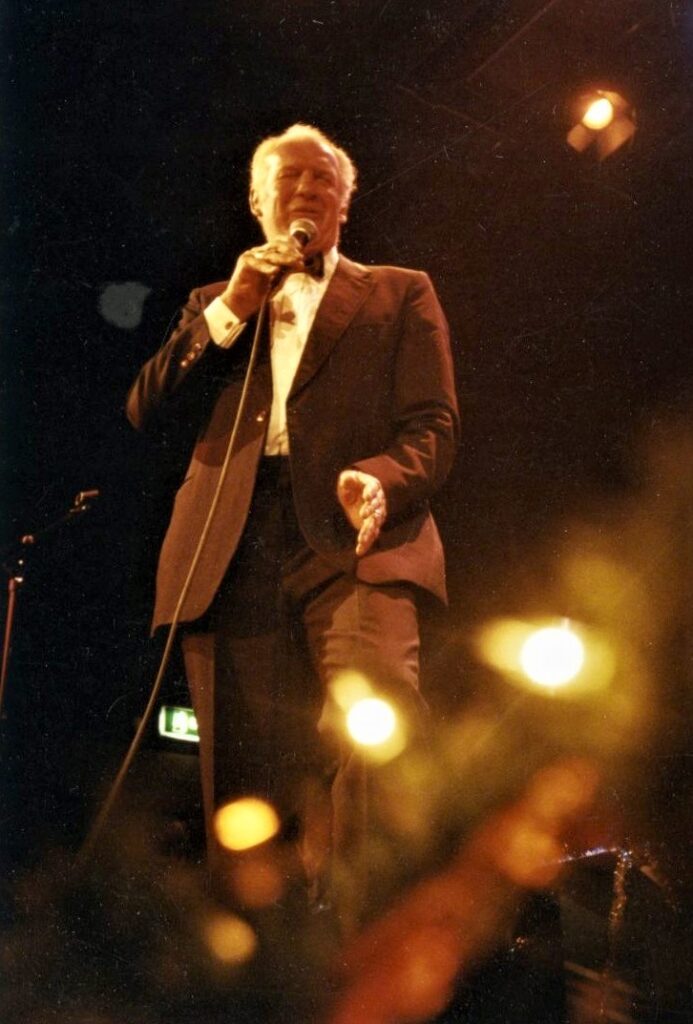
MIKE DAVIS. Innovative rugby union coach renowned for leading England to a grand slam as well as for his impersonations of Elvis Presley.
Mike Davis liked to tell the story of how before he had his trial for England, his father had to rush out and buy him a proper pair of rugby boots. Such was the spirit of amateurism in the game at the time; he had been making do with an old pair of hand-me-down football boots.
He made his debut for England in 1963, at the age of 20, and continued to play as a lock, injuries permitting for the next seven years, winning 16 caps. “His black humour was such that he would say he was dropped more often than he was picked,” said his son, Peter.
In a further example of how different things were before the professional era, Davis needed a job to go with his England career – so he presented himself to the Admiralty Board, convened for recruitment into the Royal Navy. The interview concluded with him being told that notification would follow as to whether he had been accepted. When he made to leave, a captain asked if he had his boots with him. Their first XV would soon be taking the pitch. Davis realised he needed no follow-up letter to tell him the navy wanted him.
When his England career came to a close he left the navy and went to work as a rugby coach at Sherborne School in Dorset. He proved so successful at this, coaching the first XV to four unbeaten seasons, that he was approached to coach England and n that role, promptly achieved the grand slam in his first season, 1979-80. This followed a decade of domination by Wales and France, and an England grand slam drought that dated back to 1957.
As well as having a happy knack for spotting talent, Davis was also an innovator, introducing what he called a “whoosh” style of rucking, among other things, as well as team bonding sessions in which rather senior players were consulted about tactics.
Not that he had an emollient relationship with the Rugby Football Union. “My father had a dream start but it was a stressful role and it was ridiculous he and the team were not paid,” Peter said. “He was driving all over the place to look at potential international players and given only petrol money. Later he was prevented from publishing a coaching book and hence earning money out of the game.”
Davis remained England coach until 1983, when they finished bottom of the Five Nations table with just one point and he decided to return to full-time teaching. “It is time for me to get a proper job,” he said. “I have turned wine into water.” The reality was some of his best players had retired. He stood down with a record of ten victories, three draws and seven defeats and it took England a further eight years to achieve another grand slam.
Alec Michael Davis – his parents wanted to ensure his initials did not spell MAD – was born in Lichfield, Staffordshire. His father was Alec Davis, a music hall singer and stuntman who served in the Welsh Guards in the Second World War and who played rugby for Gloucestershire; his mother was Olive Davis, the sole hairdresser whom Gracie Fields, the actress, allowed to cut her hair. The family moved to Torquay, where Davis attended the grammar school.
David took to rugby so well that sometimes on Saturdays he would play for the school in the morning and for Torquay Athletic Rugby Club in the afternoon. One of his holiday jobs was working in Torbay hiring out pedalos. He told two customers that if they pedalled fast enough, the engine would start. They returned exhausted and remonstrated that the engine was broken before they had hired their craft.
He studied physical education at St Luke’s College, Exeter, played for Devon and won his first England cap in the year the team undertook their first short tour, to New Zealand and Australia. Davis distinguished himself by playing for much of the second Test against the All Blacks with a dislocated shoulder. Replacements were not permitted then and he needed an injection for pain relief at half-time to carry on; unsurprisingly he took no part in the final tour game, against Australia.
In 1966 he led the navy to victory in the Inter-Services Championship before joining Harlequins. In 1970 he returned to Staffordshire, the county of his birth, leading them to the county championship. He had embarked on a career as a schoolmaster as he reckoned that teaching in the independent sector – maths in his case – would allow him the time to play club and international rugby.
His first two posts were at Haileybury and St Paul’s, both schools within reach of Harlequins. When he became a family man and wanted more space, he moved to Sherborne, where he taught at the boys’ school and, briefly later, the girls’ school as well.
As England coach he inherited a formidable pack and some sprightly backs. Yet those senior forwards regarded him with a somewhat sceptical eye. “In his first year Mike showed himself to be slightly naïve in dealing with senior players”, Peter Wheeler, the Leicester captain and England hooker, recalled. “Initially he approached the job using the same terminology he had used with the schoolboys and treating the three-week visit to Japan, Fiji and Tonga as though it were a prolonged training session for the next international championship. You cannot relate such a tour to the mud and cold of Twickenham or Cardiff eight months later.”
After his spell as England coach, Davis returned to Sherborne, as a housemaster and coaching swimming as well as rugby. He sang in the school jazz band and played for the staff cricket XI, on one occasion managing to run out the art master, Trevor Boyd, when he was on 99. “Trevor brought this up often in my art classes,” Peter Davis said. It did not, however, prevent him from pursuing a career as an artist.

After retiring from Sherborne, Davis became director of rugby at Dorchester and also coached Bournemouth, Bristol and, in advanced age, Sherborne Town. He kept up the singing for which he was renowned, especially his Elvis Presley impersonation.
David met Jenny Hull when he was a teacher and she was a nurse in the school sanatorium at Haileybury. Within three months they became engaged and when both appeared in the staff pantomime, were regaled with ‘Here Comes the Bride’ as they came downstage. They were married in 1969 (their honeymoon was interrupted by two England trials), moving to St Paul’s before heading, in 1974, to Sherborne, where Davis taught for 28 years. They had three children: Joanna, who is manager of a framing business; and twin boys, Simon, who is chief executive of Walk-In Media and who was born four minutes before Peter, an artist in Hove, East Sussex.
As England coach, Davis has been fortunate in the players he inherited or introduced: Bill Beaumont, his captain, with whom he forged a friendship; Fran Cotton, Tony Neary, Roger Uttley and Clive Woodward in particular. Beaumont said the 1980 team was the best prepared he had known in the game. England won the grand slam that year through a 30-18 victory over Scotland and Beaumont was carried off the pitch on the shoulders of his team-mates.
Mike Davis, rugby player and schoolmaster, was born on January 23, 1942. He died of complications from Parkinson’s disease on May 10, 2022, aged 80.
Alec Michael (Mike) Davis (1942-2022)
Born in Lichfield on 23 January 1942.
Attended Torquay Grammar School. Played rugby for Torquay Grammar School and Torquay Athletic Rugby Club.
St Luke’s College, Exeter. Dip.Ed. (PE).
Royal Navy. In 1966 led the RN to victory in the Inter-Services Championship.
England XV lock forward, 1963-1970 (16 caps).
Played for Devonport Services, Harlequins, Devon, Staffordshire and the Royal Navy.
Taught at Haileybury and St Paul’s School.
Taught at Sherborne School: Assistant master (mathematics), 1974-2002; rugby coach 1974-1979, 1988-1989. Between 1975 and 1978, with Phil Jones he coached three unbeaten seasons with 35 out of 35 school matches being won. His games partnership with Phil Jones spanned five seasons. Manager of Sherborne School Sports Centre, 1974-2002.
England XV coach 1979-1983. Coach to the 1980 Grand Slam-winning England team.
Housemaster of The Digby, 1987-1992.
Died on 10 May 2022, aged 80.
Author: The Science of Rugby Football (1985).