
In the early 1950s Alan Turing’s achievements were still secret and he was definitely persona non grata at Sherborne School. Nevertheless, L.S. May (Housemaster of The Green and inspirational chemistry teacher) invited him to speak to the Alchemists Society in March 1953. The minutes of the meeting in the Lent 1953 edition of the Shirburnian record that ‘Mr Turing read a very clear paper on the Electronic Brain’.
The “two Rogers”, Duffett and Mowll (School House) were privileged to attend this meeting and shake Turing’s hand. Many years later when we visited Bletchley Park, the guides hoped that we had not washed our hands but nevertheless asked to shake them.
In 1956 we returned from Hong Kong after two years of military service in the Royal Artillery to take up places at Cambridge University to study physical and organic chemistry respectively. We were fortunate to be accepted as ‘University Apprentices’ in the scheme that BP had initiated, financially a very attractive prospect for an undergraduate.
Early in 1959, not long before we took Finals, Crick and Watson grandly proclaimed in The Eagle pub in Cambridge that they had discovered ‘the secret of life’. They had cracked the code of heredity by postulating the structure of DNA as a double helix. The media rejoiced so loudly in reporting this finding that the world missed out on the academic response – “Neat thinking, now prove it”.
Professor Max Perutz, head of the famous Cavendish Laboratory, put together a team to provide such proof. They had to obtain high-quality crystals, X-ray photograph them and analyse the diffraction patterns. Data were fed into EDSAC 2 (Electronic Delay Storage Automatic Calculator) that occupied an aircraft-hanger sized building in the Cavendish enclosure, and it took until the next day to provide an answer. It was one of the world’s earliest computers, the successor in 1958 of EDSAC 1 (1948), a miniature of which is in the museum at Bletchley Park.
The team of Max Perutz, John Kendrew and Lawrence Bragg as well as Francis Crick and his colleague James Watson were subsequently all awarded Nobel Prizes. Rosalind Franklin, working in London, was very influential in the early thinking, produced the perfect crystals that were needed and brought them up to Cambridge. Sadly, we never had the opportunity to meet her as she died in 1958 before we were involved and before she could be awarded the Nobel Prize that she deserved.
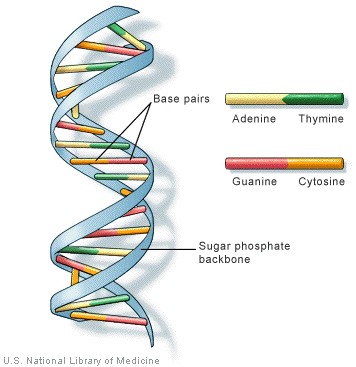
But it was the ‘two Rogers’ who did the painstaking work of analysing the x-ray photographs and feeding the data into EDSAC 2. This involved climbing up a steel ladder to input the punched tape, sweating profusely in the heat generated by the computer that worked on electronic valves (there were no transistors in those days) and returning up the ladder next morning to collect the results that eventually provided proof for ‘the secret of life’.
Francis Crick was not an easy man to communicate with and appeared to regard the proving exercise as unnecessary. We shared a desk next to his tiny office in an old WW2 Nissen hut adjacent to the laboratory. An imposing 3-foot-high model of the double helix, showing the positions of the four base components and the hydrogen bonding, stood beside the desk. Sadly, it was never photographed and just disappeared.
We had been selected to join the proving team as we were known to Perutz and Kendrew. Our results for our final year were good and some attempt was made to encourage us to pursue an academic career. Despite having met Alan Turing shortly before he died and worked with research chemists of the highest calibre, we decided that BP had more to offer.
Memories of those weeks working in the team that proved the secret of life have faded. Looking back on it all now, nearly seventy years later, we are very grateful to BP for allowing us the few weeks at Cambridge before embracing life in industry where we were initiated into shift-work and other secrets of life at BP’s Kent Refinery. We subsequently had varied careers in BP.
We have been fortunate to work with and meet people of considerable intellectual stature.
Age may wither but we keep good company.

Roger Duffett FRCS and Roger Mowll FRSC.
22nd October 2025.