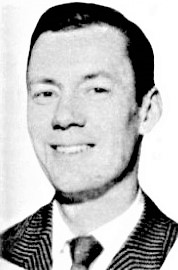
Michell Raper’s account of being invited in July 1942 to visit Littleton Powys to discuss his poem ‘The River’, which won the English Verse Prize in 1942, was privately published by Timothy Rogers in R.A. Atthill & G.M.H. Raper (1996):
‘In July [1942] I met Mr Littleton Powys for the first time, and I described the meeting fully, since it was for me an historic occasion. He had expressed a wish to see me and have a talk about my poem ‘The River’ [Raper won the English Verse Prize in 1942, aged 15], and accordingly I went to his cottage on a fine Sunday morning. I found Priestlands without difficulty and his house also, since he had told me “that the name is written up on a little wicket gate”.
I stood on his door step for approximately fifteeen minutes, ringing the bell at intervals of two minutes and listening to the sound of tea cups, spoons and conversation issuing from the room. I was far too scared to go in and knock at the inside door but merely stood, hot and fingering my hat and tie, until it should please him to hear my ring. At last, to my infinite relief, the door was opened and he came out; he was a tall, large man with thick, white hair and a kindly red face. Extending an enormous hand he shook mine with warmth and said “Ah, so you’ve crawled up to see me in my house”, with the voice of one who means every word of what he says and has underscored half of them for emphasis.
“Have you had your tea?” he continued. “No, Sir.” “We have, ” said Mr Powys, and taking me by the shoulder, conducted me ceremoniously into his sitting room where his sister, a frail, rather intent-looking lady, was sitting. “This,” announced Mr Powys “is our poet, Raper. Raper, this is my sister.” She shook hands with me and said, “I was so thrilled by your poem. As children we knew the country so well.” We cleared away the tea things together, “so that then we can have a long, full talk about your poem,” said Mr Powys. Eventually all was ready and he and I repaired to the sitting room and sat down on the sofa for the “long, full talk”.
It is certainly not my intention to describe in full the remarks that he made about me, for all that was far too complimentary to make repetition of interest to any third party; but his manner, his fullness of spirit and his obvious sincerity merit a more accurate description that I can give. So much I learnt, however, that he liked my poem because its theme was the love of England and the timelessness of all beauty. All this was emphasised by a series of paralysing thumps on my right knee and a most terrific delight in everything that he said and heard.
Did I realise that the metre was that of ‘In Memoriam’? No, I did not. Well, that was simply marvellous and he really must make a note of it. “Oh, you blessed, blessed boy”, all this with an accompaniment of thumps. He said I really was wonderfully lucky to have this gift, “this marvellous gift of loving nature”. He would really have to tell his friend Redwood Anderson all about it. There was nothing antiquated about him, except the whiteness of his hair which fell in thick manes on either side of his head. His bright eyes were on me continuously, smiling with assent to everything that I said.
The notes of “my old brother Jonathan [John Cowper Powys]; that’s his photograph on the mantlepiece”, figured very largely. The notes were in the form of an enormously long letter, written in little bunches of words from the top left to the bottom right corner of the page and with countless exclamations and side lines in Greek, Welsh, country dialect. and Powysian panegyrics. The whole was written in a half legible scrawl with large portions written vertically or added above by means of arrows. Much of what he said I could not fully absorb, owing to my total astonishment that anyone could like my poem so much. I really was amazed and although I never bored my friends with long accounts of what he read, when I eventually returned to my house [Westcott] I was far from believing what Brother Jonathan said. Littleton seemed to fondle each line of his brother’s letter and retailed it to me with a smile in which awe and mysterious delight were mingled.’
Biographical notes:
Godfrey Michell Hamilton Raper (1926-1995) (Westcott 1940-45) won the English Verse Prize in 1942 (aged 15) with his poem ‘The River’. John Cowper Powys wrote of the poem: ‘The interesting psychological thing is the fact that he allows not the slightest flicker of the war to show itself. Though the pillars of the earth shake, though the walls thereof reel and rock, our Sherborne poet will lose his own identity in the life of the river Parrett and turn that life into memorable beauty… Let me add, though of course in these things a critic’s personal taste governs his feelings, that for me the two outstanding poems, I will not say poets, for there who can predict? (and all these poets change so quickly that the problem transcends prediction as well as adjudication) of these ten years are Raper’s ‘The River Parrett’ and Angwin’s ‘First Evening’.’ In 1943 Raper submitted a poem entitled ‘The New World’ but, according to Littleton Powys ‘something seemed to have gone wrong with him, and although his versification was corrected, he had become self-conscious and stilted.’ As joint editor of The Shirburnian with Timothy Rogers (Abbeylands 1940-45) they secured for the December 1944 issue the first publication of Cecil Day Lewis’s poem ‘The Christmas Tree’. After National Service in Palestine, Michell Raper went on to study at Oriel College, Oxford. He worked as a broadcaster and producer with BBC TV and Radio.
See also:
Obituary for G.M.H. Raper, The Independent, 1 April 1995
Judging the English Verse Prize 1939-1949 – Littleton Powys and John Cowper Powys
The Powys Family and Sherborne School
For further information about the Sherborne School Archives please contact the School Archivist.
Return to the School Archives homepage.