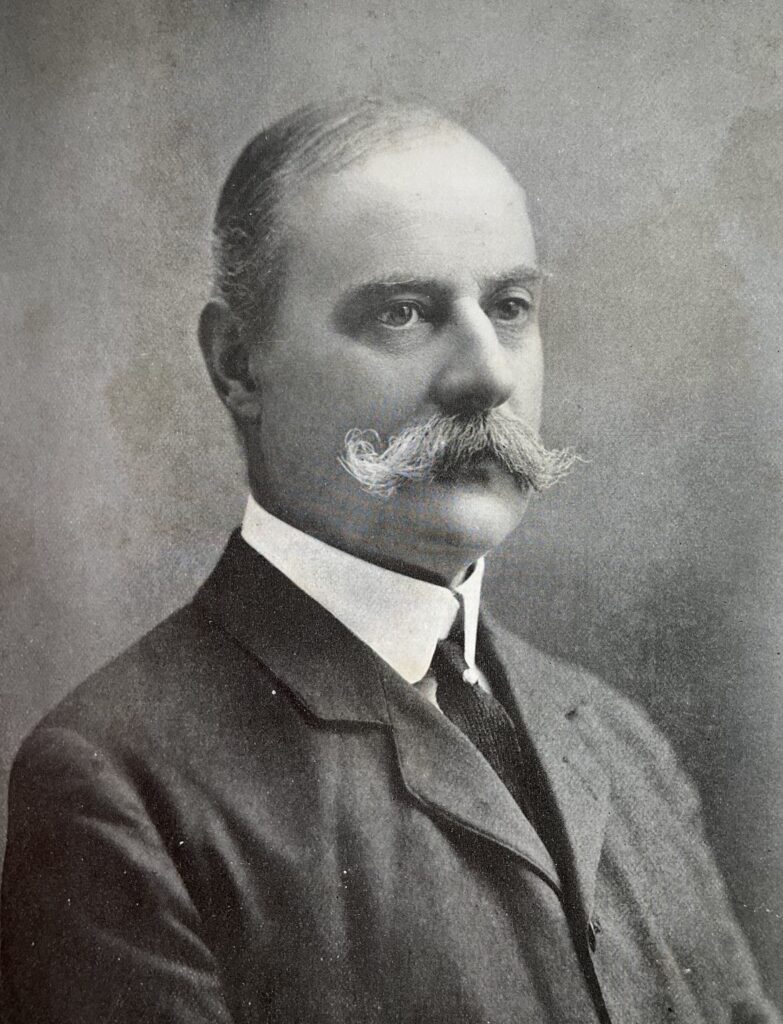
The Coronation of Edward VII and Queen Alexandra was held at Westminster Abbey on 9 August 1902, but without the medical skills of the surgeon Sir Frederick Treves (Governor of Sherborne School 1906-1910) the Coronation may never have taken place!
In 1901, Sir Frederick Treves (1853-1923) was appointed Honorary Serjeant Surgeon to King Edward VII. Edward’s coronation was originally scheduled to take place on 26 June 1902, but it had to be postponed at short notice when on 24 June the King was taken ill with appendicitis. Appendicitis then had a high mortality rate and was not generally operated on, but Sir Frederick Treves managed to persuade the King that if he did not operate on him there would not be a coronation but a funeral. Together with Lord Lister, Treves performed the operation on a table in the Music Room at Buckingham Palace, draining the infected appendiceal abscess through a small incision and leaving the appendix intact. The grateful King presented Treves with a baronetcy and the use of Thatched House Lodge in Richmond Park.
Sir Frederick Treves served as a Governor of Sherborne School from 1906 to 1910, and in 1906 was called to the Yeatman Hospital in Sherborne to make recommendations for the modernisation of the operating theatre. Treves also wrote a number of books, including The Highways and Byways of Dorset (Macmillan, 1906), and The Elephant Man and Other Reminiscences (Cassell, 1923), which was the first account of Joseph Merrick (‘the Elephant Man’) who had lodged with him from 1886 to 1890.
The rescheduled coronation of Edward VII finally took place at Westminster Abbey on 9 August 1902, when the service was conducted by the Archbishop of Canterbury, Frederick Temple (Governor of Sherborne School 1896-1902). Since the Norman Conquest in 1066, the Archbishop of Canterbury has played a central role in the coronation. During the ceremony, the Sovereign takes the coronation oath and is then ‘anointed, blessed and consecrated’ by the Archbishop. After receiving the orb and sceptres, the Archbishop places St Edward’s Crown on the Sovereign’s head. Two days after the Coronation the King and Queen presented Archbishop Temple with the Royal Victorian Chain, a decoration founded by the King in honour of his late mother Queen Victoria.
Frederick Temple (1821-1902) attended Blundell’s School and Balliol College, Oxford, and in 1856 was appointed Chaplain-in-Ordinary to Queen Victoria. He served first as Headmaster of Kneller Hall, a college founded by the government for the training of masters of workhouses and penal schools, and from 1858 to 1869 as Headmaster of Rugby School.
In 1869 Temple was appointed Bishop of Exeter and in 1871, at Headmaster H.D. Harper’s suggestion, was invited to join the Governing body of Sherborne School, on which he served for the next 31 years, including as Chairman from 1883 to 1902. On being appointed Archbishop of Canterbury in 1892, Temple asked to resign from Sherborne’s governing body, but Headmaster F.B. Westcott asked him to stay on until the School roll reached 200.
Just four months after the Coronation, Archbishop Temple was taken ill and died on 23 December 1902. The Governors of Sherborne School put on record their deep sense of loss at his death and acknowledged his ‘untiring support and wise guidance’ during the 31 years he had served as a School Governor.
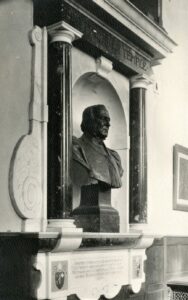
In 1905, a bronze bust of Archbishop Frederick Temple by Sir George Frampton RA was unveiled by Temple’s widow in the Big School Room at Sherborne School. The bust in its marble niche can now be seen in the lobby of the Big Schoolroom.
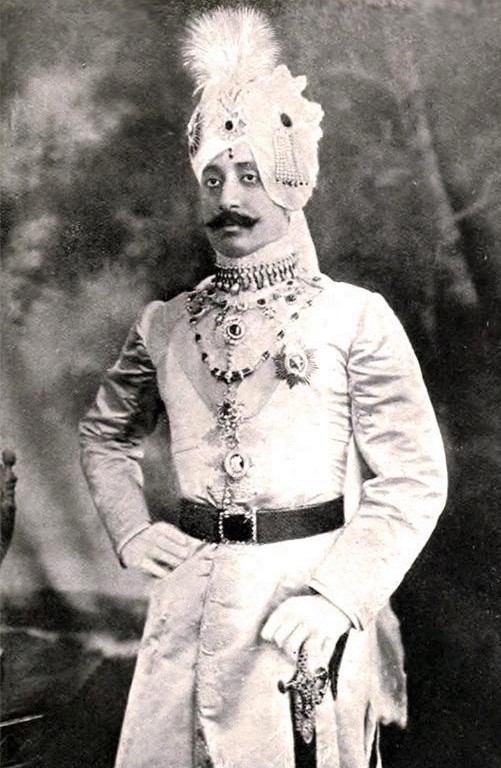
As Emperor of India, Edward VII’s coronation was attended by many Indian princes, one of whom was Prince Wasif Ali Mirza (Sherborne Prep School 1887-1890). Prince Wasif Ali Mirza was the son of Nawab Sir Sayyid Hassan Ali Mirza Khan Bahadur, His Highness the Nawab Bahadur of Murshidabad and Amir Dulhan Kulsum un-Nisa Begum Sahiba. From 1887 to 1890 the Prince and his younger brother Prince Nasir Ali Mirza lived at Newell House in Sherborne as wards of the Rev. John Jefferies Bartlett Coles (1848-1935), and attended Sherborne Prep School as day pupils. The Princes later attended Rugby School and Trinity College, Oxford. In December 1906, Prince Wasif Ali Mirza succeeded his father as Amir ul-Omrah, His Highness the Nawab Bahadur of Murshidabad.
Prince Wasif Ali Mirza also attended the 1903 Delhi Durbar which was held at Coronation Park in Delhi to celebrate the succession of Edward VII and Queen Alexandra as Emperor and Empress of India. The King did not attend the Durbar but was represented by his brother Prince Arthur, Duke of Connaught. For the Durbar, the Indian princes wore their most spectacular jewels and it was said to have been the greatest collection of jewels ever seen in one place. Films made of the event were shown throughout India and are credited with having launched the Indian film industry. In 1911, the Prince, by then His Highness the Nawab Bahadur of Murshidabad, attended the Coronation of George VI.
Old Shirburnian poet Sir Lewis Morris (School House 1850-51) wrote an ode in celebration of Edward VII’s coronation – the only problem was that the poem was published before the date of the Coronation was rescheduled from 26 June to the 9 August 1902, and as a result the date of the Coronation given in the poem is incorrect. Luckily, no one seemed to notice and the King presented Sir Lewis Morris with a Coronation Medal in appreciation of his ‘Coronation Ode’.
Lewis Morris’ ‘Coronation Ode’ begins with the following lines:
‘Sing, soaring voice, to a joyous tune,
Mourning is done and pain;
Peal, solemn organ music, deep, sublime,
For ‘tis a joyous time!
Shine forth serene, unclouded sun of June,
To gild the dawning Reign;
Hushed is the shriek of War. ‘Tis Peace! ‘tis Peace!
Blest calm, endure, increase!
Today rejoicing Britain grieves no more!
Resound, oh, reverend aisles, as oft before;
Kneel, ermined nobles, kneel, fair jewelled train,
As in our storied England past away;
‘Tis a triumphant day.’
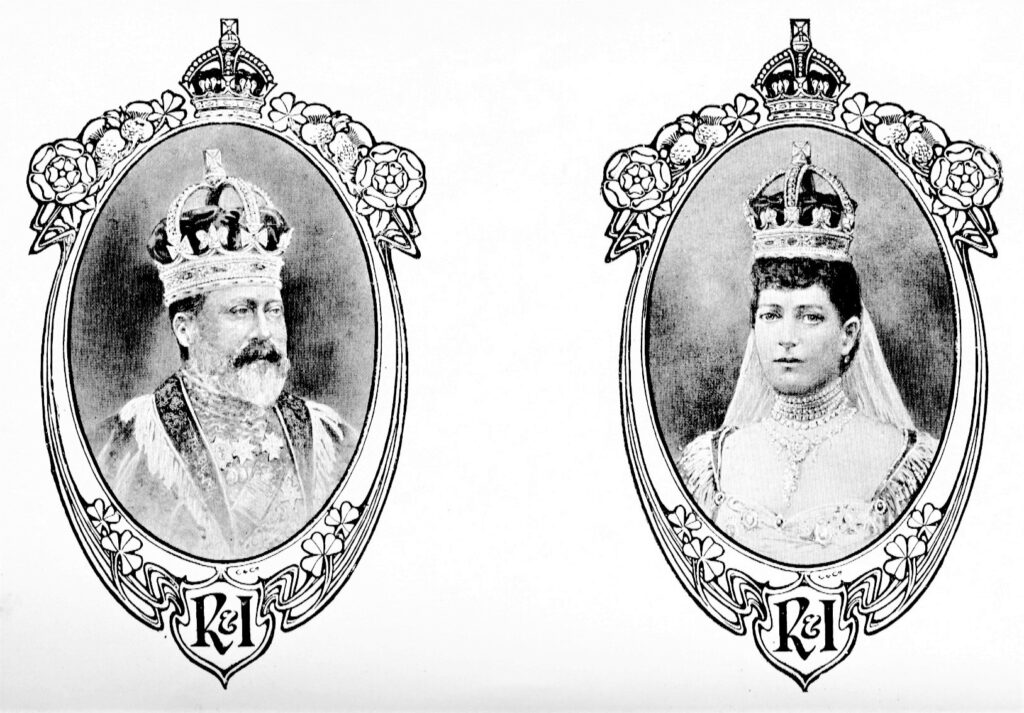
At Sherborne School, plans to celebrate the King’s coronation overlapped with celebrations for the end of the Second Boer War, and there was general disappointment when the Coronation was postponed, mainly because the two days’ holiday was cancelled. The Shirburnian in June 1902 had as a frontispiece photographs of the King and Queen, and a special ‘Coronation’ poem by James Rhoades (Abbeylands housemaster 1880-1893), though it was decided against the suggestion that the issue should have a special Royal red cover.
The following Old Shirburnians were awarded Coronation Honours and Promotions in 1902:
- Colonel Edward Raban, R.E. (1850-1927) (Abbey House 1864-67) awarded Companion of the Bath.
- Major Christopher Reginald Buckle, R.A. (1862-1952) (The Green 1875-80) awarded Companion of the D.S.O.
- Lt.-Col. Harry King Stewart (1861-1907) (School House 1876-77), Reserve of Officers, Johannesburg, Mounted Rifles, King’s Messenger 1902-1905, awarded Companion of St Michael and St George.
- Major Henry Richings Bousfield (1863-1930) (School House 1877-78), Natal Volunteers, awarded Companion of St Michael and St George.
- Sir Lewis Morris (1833-1907) (School House 1850-51) presented with the Coronation Medal for his ‘Coronation Ode’.
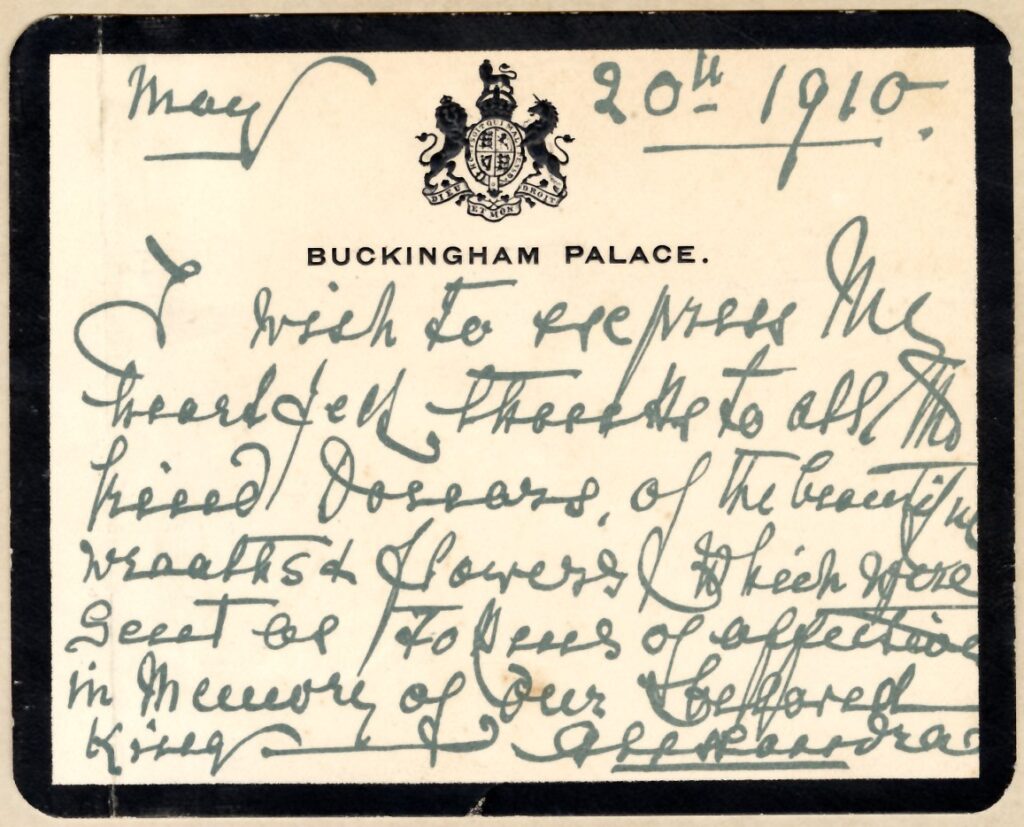
King Edward VII died at Sandringham on 6 May 1910 and was buried at Windsor on 20 May 1910. After the King’s funeral, Queen Alexandra sent handwritten notes of thanks to those who sent wreaths and flowers, including this one sent to Noel Dean Bardswell MVO (The Green 1886-89).
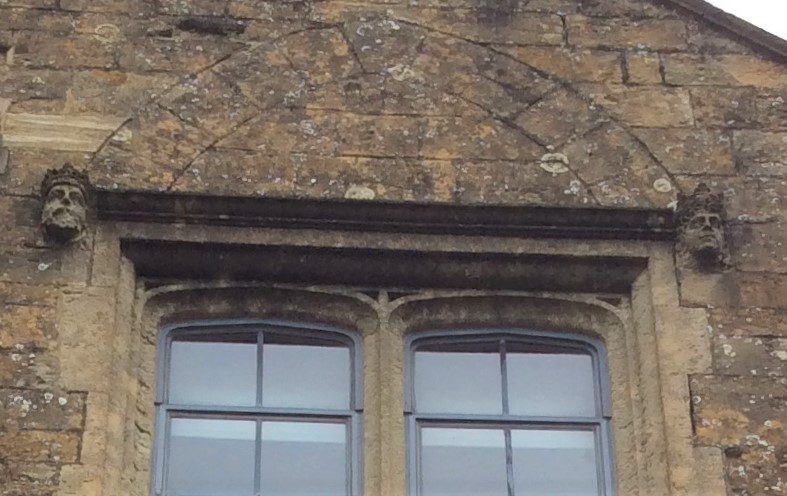
On 24 May 1910, the Digby Memorial Church Hall in Digby Road, Sherborne, was officially opened by Bishop John Wordsworth of Salisbury. Designed by architect C.B. Benson of Yeovil, on the west front gable of the building are carvings by F. Woollen of Reckleford of the heads of Edward VII and Queen Alexandra, together with heads of the Archbishop of Canterbury (Randall Davidson), the Bishop of Salisbury (John Wordsworth), two Vicars of Sherborne (the Rev Sidney Augustus Selwyn and Canon William Hector Lyon), and the vicar’s warden (Mark Parsons).
Rachel Hassall
Archivist, Sherborne School
See also:
For further information about the Sherborne School Archives please contact the School Archivist
Return to the School Archives homepage